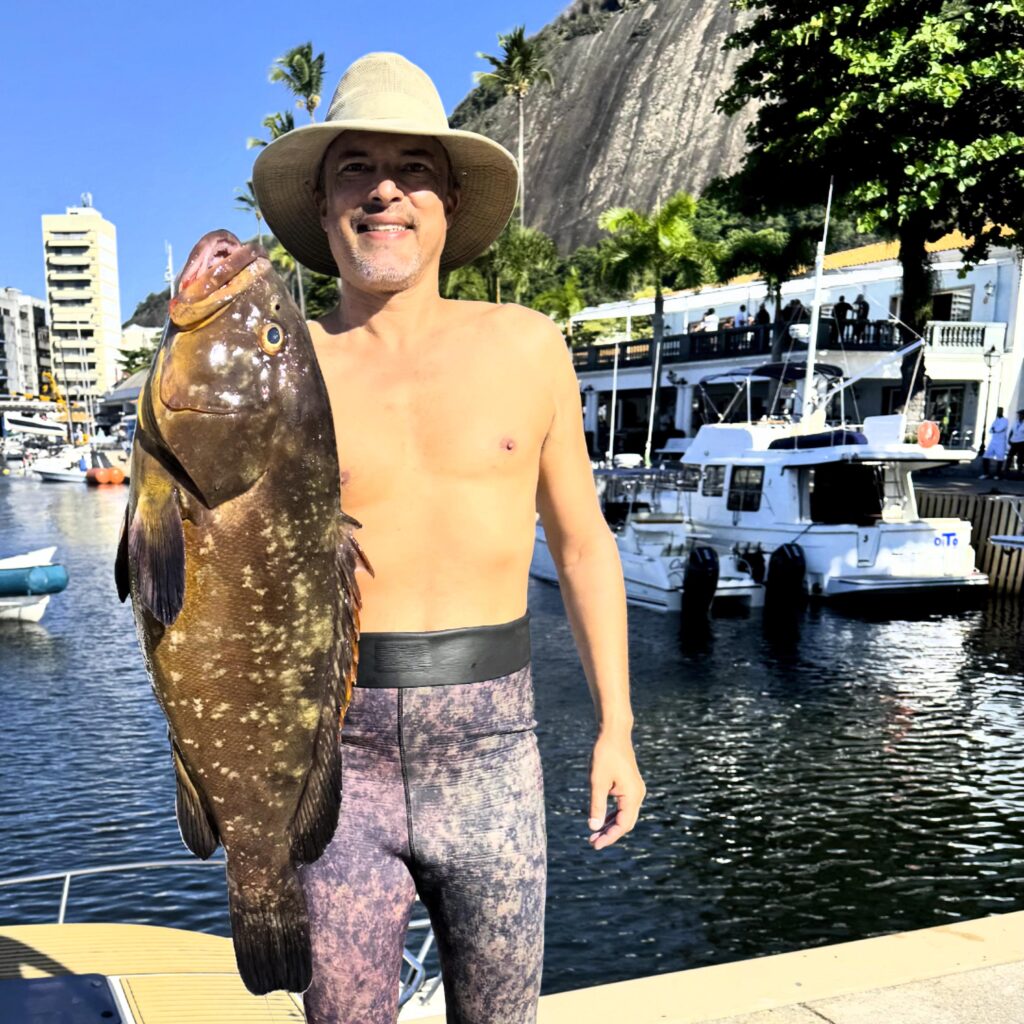

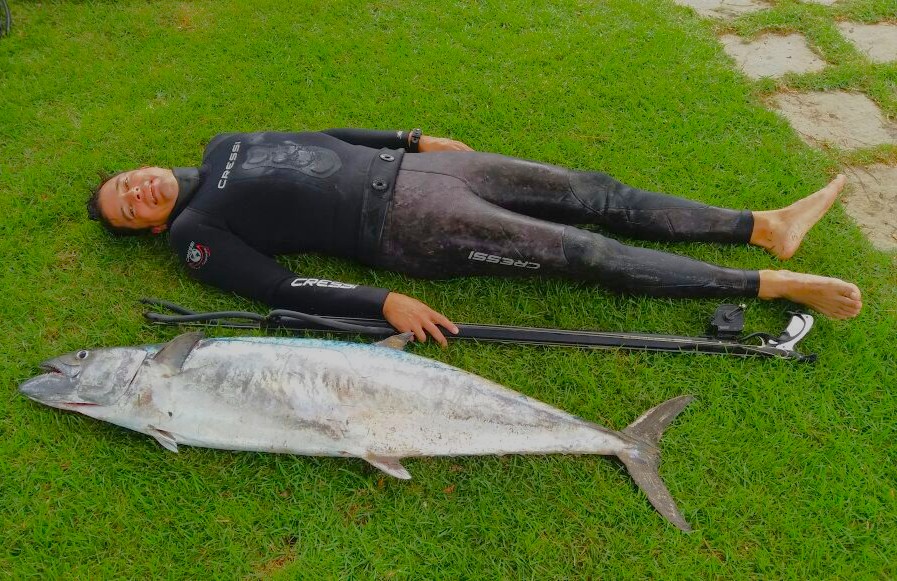
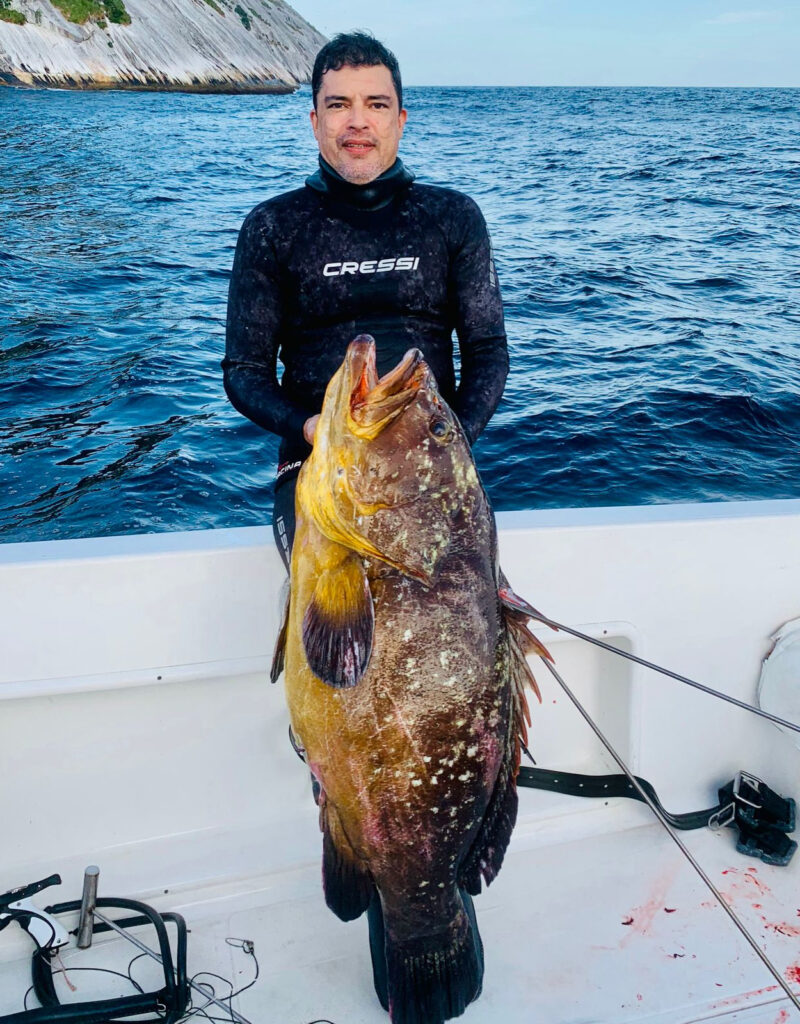
Apnea Passion Magazine had the pleasure of interviewing Francisco Loffredi, Brazilian athlete, current World Cup Champion, from the Cressi Team, journalist and professional fisherman. Former captain of the U.S. National Team, Loffredi is now Captain of the Brazilian National Team and one of the 12 finalists who will compete for a place among the six athletes who will represent Brazil at the upcoming CMAS World Spearfishing Championships, scheduled to take place in his own country. A great promoter of the Brazilian bid, Francisco personally contributed to the project and to the presentation of the event to CMAS. With his usual helpfulness and passion, he gave us a preview of what to expect from this important world edition.
Apnea Passion Magazine: Francisco, we know that you have been one of the main promoters of this World Championship in Brazil. What kind of competition field and what kind of seabeds should we expect?
Francisco Loffredi: Yes, it is true, I played an important role in the initial phase. My contribution was mainly related to assisting the Brazilian Federation in the preparation and presentation of Brazil’s bid to host this World Championship. Once CMAS officially assigned the organization to our country, I decided to leave the organizing committee to focus exclusively on my role as an athlete and Captain of the National Team. In fact, I am currently one of the twelve finalists who will compete for selection to be part of the Brazilian team.
As for the competition field, we are talking about an extremely interesting area from a spearfishing point of view. The seabed is rocky, rich in ravines, shallows and islands, with very varied and challenging environments. It is a stretch of coastline that can challenge even the most experienced fishermen, but offers great opportunities in terms of catching fish.
AP: You anticipated that many of the species present are similar to those in the Mediterranean. What will be the main prey that the athletes will find?
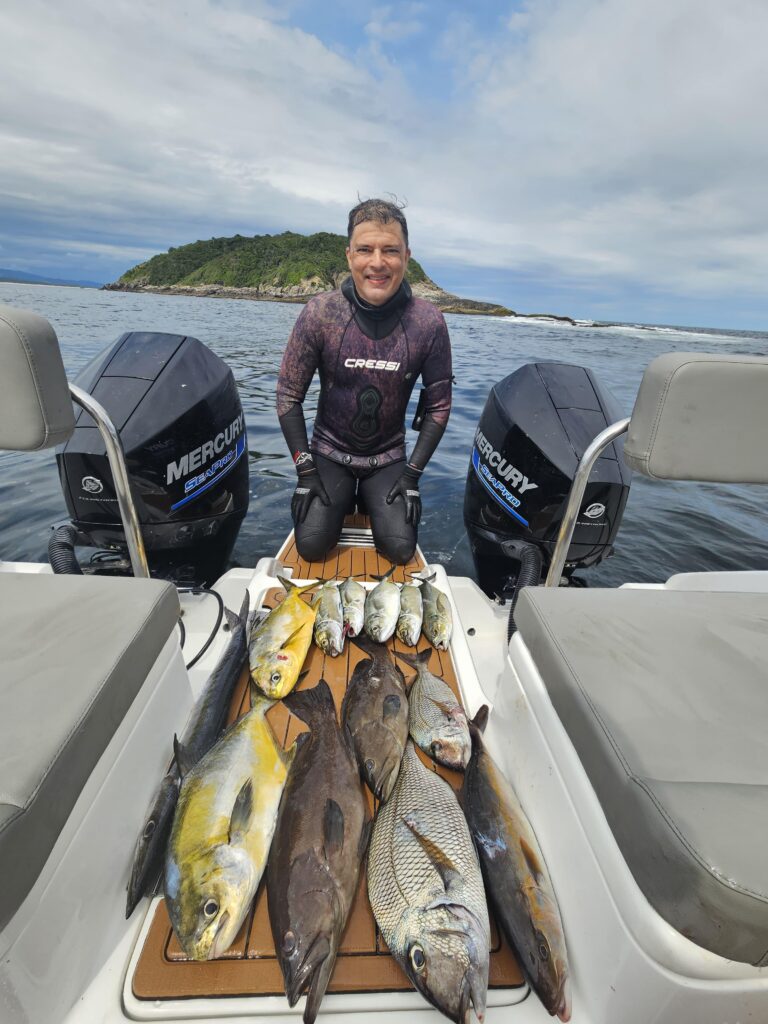
Francisco Loffredi: The area chosen for the World Championship is particularly rich in fish, both in variety and in quantity and size. Many of the species present are also well known to European fishermen. We will find, for example, white groupers, seabreams, gilthead sea breams, amberjacks and mottled groupers: common prey in the Mediterranean.
Adding to the interest is the presence of tropical fish that pose an unprecedented challenge for many athletes: I am talking about the African Pampano, Cobia and several species of Mackerel. The fish diversity will offer a stimulating mix of familiarity and novelty, and this will make the competition even more compelling and technical.
AP: Athletes are always excited when there is no shortage of fish. Can we expect rich catches in this edition?
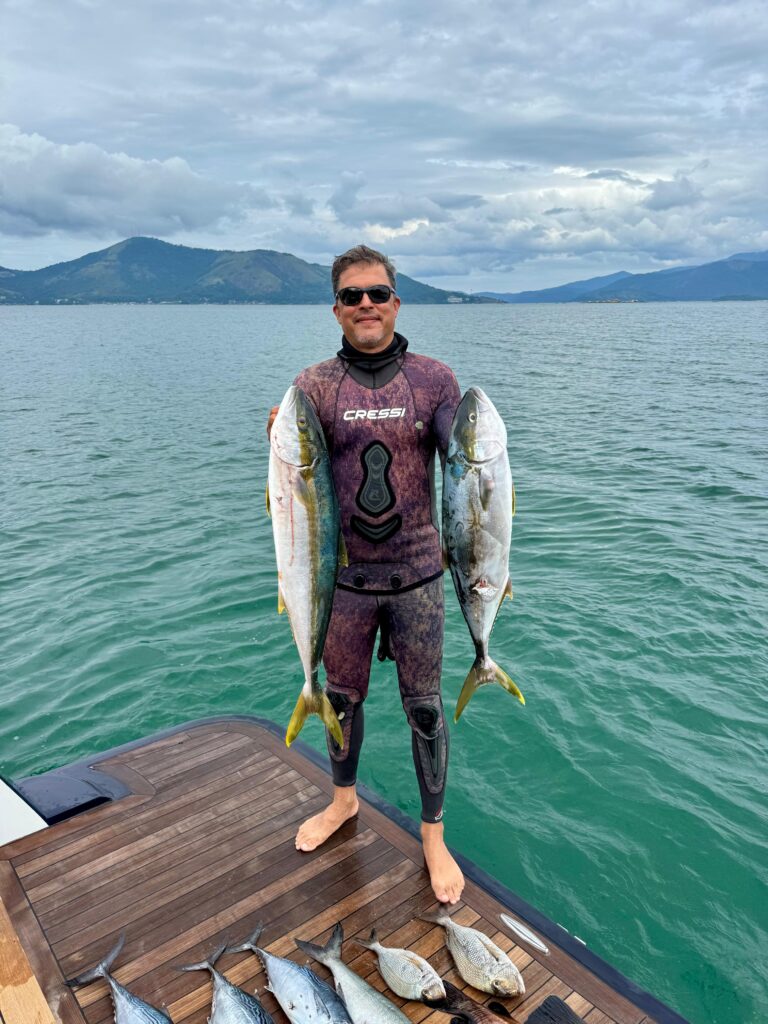
Francisco Loffredi: Absolutely. The choice of the competition area was made precisely with the aim of offering a dynamic, spectacular and… be full of fish! We strongly wanted to avoid those competitions where you see few prey and small size.
We know that such a competition field can, in a way, also favor foreign teams, but we preferred to put the beauty and richness of our sea at the center of the show. It will be a World Championship where, in all likelihood, we will see many fish and of important size. This can only make athletes, technicians and fans happy.
AP: South Brazil is a subtropical area: what are the typical sea and weather conditions at this time of year?
Francisco Loffredi: The stretch of sea where the competition will take place, in southern Brazil, has similar characteristics to the Mediterranean, being a subtropical region. The seabed is rocky, with many caves and interesting underwater formations such as shallows and submerged reefs, which can offer excellent conditions for spearfishing.
As for water visibility, it can vary significantly depending on the direction of currents and wave motion, but on average it ranges between 8 and 10 meters. It is important, therefore, that teams adapt quickly to changing sea conditions, which can vary even during the same day. Good sea-reading skills will be crucial.
AP: Over the past decades, in the South American World Championships, European teams have always performed well. In your opinion, which South American team could dominate? Are there any athletes you consider particularly promising?
Francisco Loffredi: In the last 30 years European teams have actually dominated the scene, but among the South American teams I see Chile very well. They have a very solid fishing school and great athletes.
In particular, I believe that Esteban Sierra, current Chilean champion and reigning South American champion, will be one of the athletes to watch. I had the opportunity to watch him during last year’s Pan American Championships and I was really impressed by his physical strength, technique and the lucidity with which he tackles each dive. If he continues on this path, he can be one of the big surprises of the World Championships.