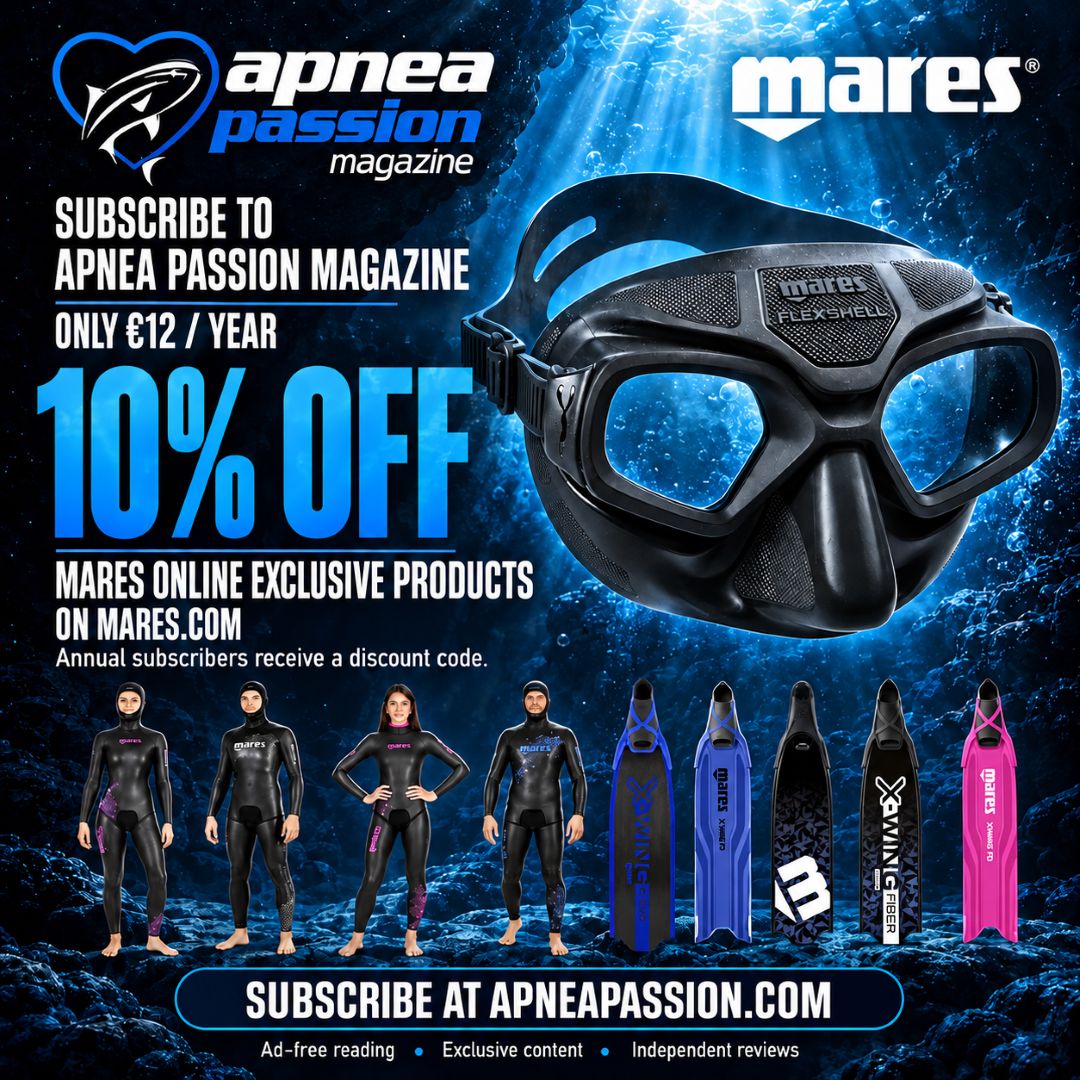
We have already presented the Mares Flexshell freediving mask, highlighting its 74 cc internal volume: the lowest measured among the masks tested by Apnea Passion using the same independent measurement protocol.
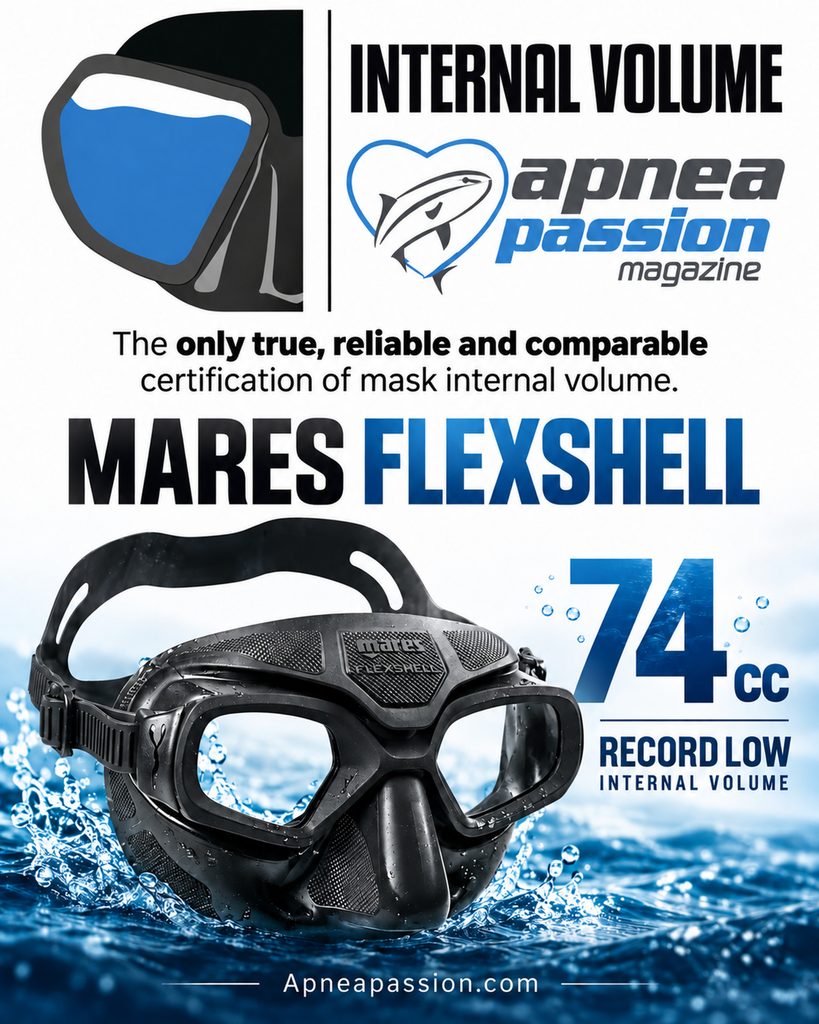
Comparing mask internal volumes requires a precise, repeatable measurement method. Self claims from different manufacturers cannot be fully trusted and cannot be automatically be compared when the measurement procedures differ. Apnea Passion applies a consistent protocol across masks, providing an independent basis for assessing this key parameter.
For freedivers, a low internal volume reduces the amount of air needed to equalise the mask during descent. But the Mares Flexshell offers more than a compact air space: its self-equalising behaviour and soft, flexible construction also make it particularly interesting.
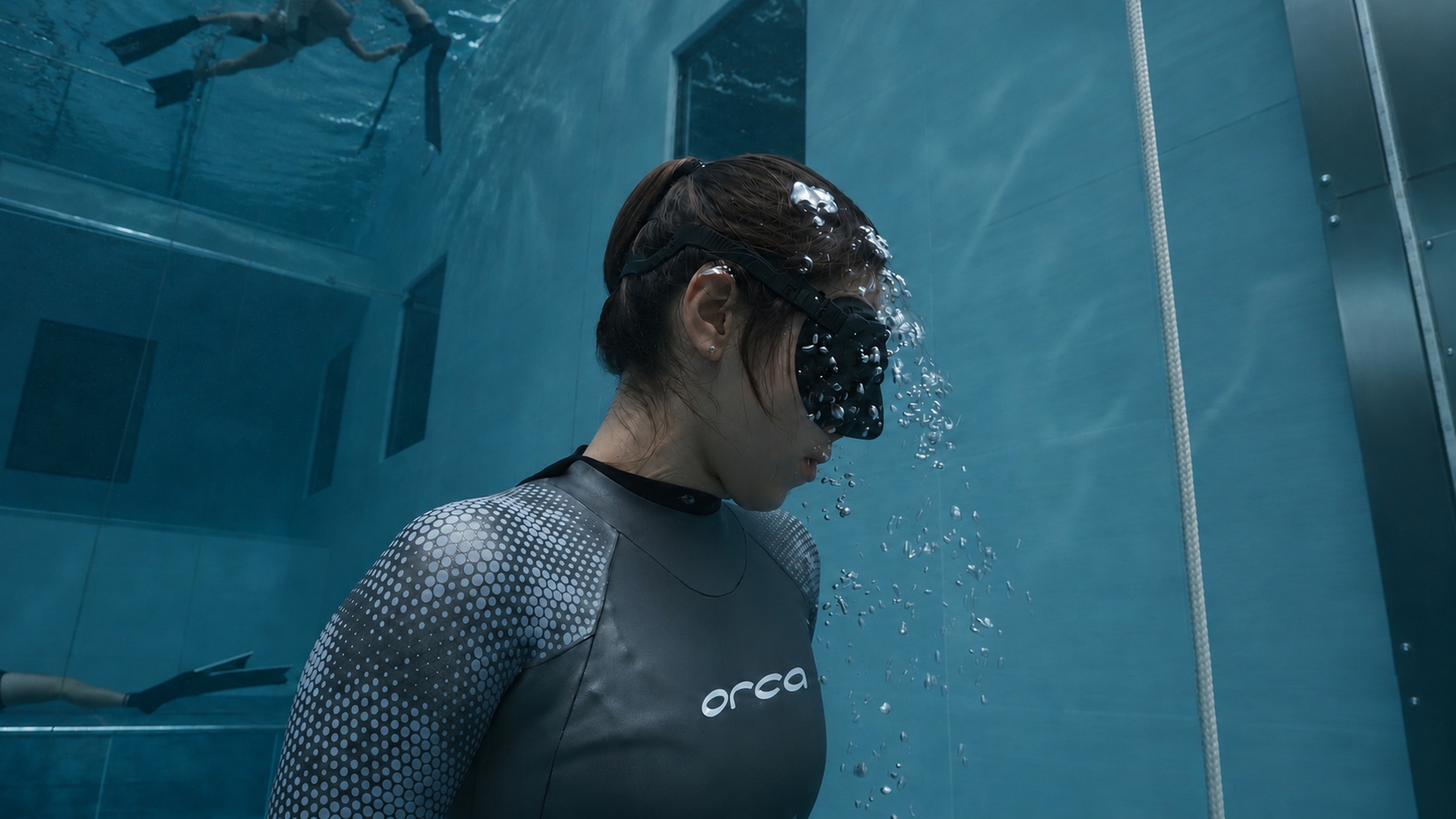
To assess its performance underwater, Apnea Passion Team members Gianni Bicchi and Sara Gonnelli tested the Mares Flexshell at Y-40, focusing on equalisation, fit, comfort and visibility. Here are their findings from dives reaching 42.5 metres and 23 metres, respectively.
Gianni Bicchi – Apnea Academy and equalisation instructor: testing from 10 to 42.5 metres
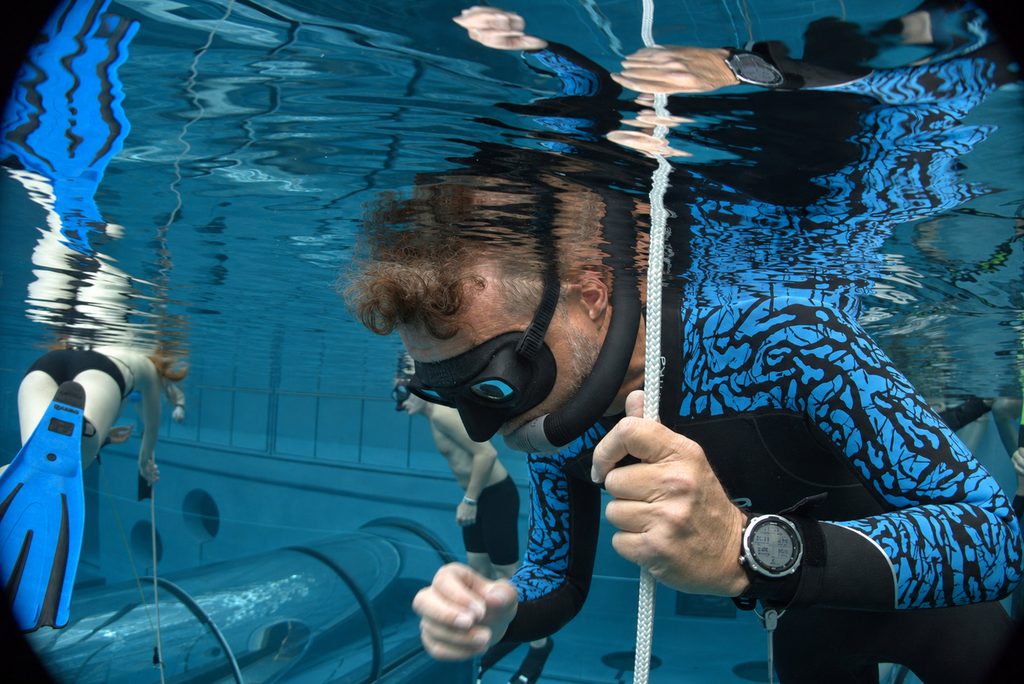
“The Mares Flexshell mask is really impressive. I did not need to equalise it between 10 and 42.5 metres. From 10 metres onwards, I kept my nose pinched to prevent the slight suction, anyway extremely lower than with tradiitonal masks, from affecting my soft palate. It felt like magic: there was no longer any need to equalise the mask. A truly interesting experience.
The fit and comfort on my face were also excellent, thanks to the softness of both the skirt and the entire structure. Naturally, the small lenses and flexible construction limit visibility at greater depths,” commented Gianni Bicchi after a couple of dives to the bottom of Y-40.
Gianni Bicchi’s test highlighted excellent comfort and no need to add air to the mask between 10 and 42.5 metres. The main limitation he reported was reduced visibility at depth.
Sara Gonnelli – Apnea Academy instructor: testing from the surface to 23 metres
“The Mares Flexshell mask is excellent. I did not need to equalise it at all down to 23 metres. Of course, I equalised my ears, but the Mares Flexshell equalised itself. Really impressive.
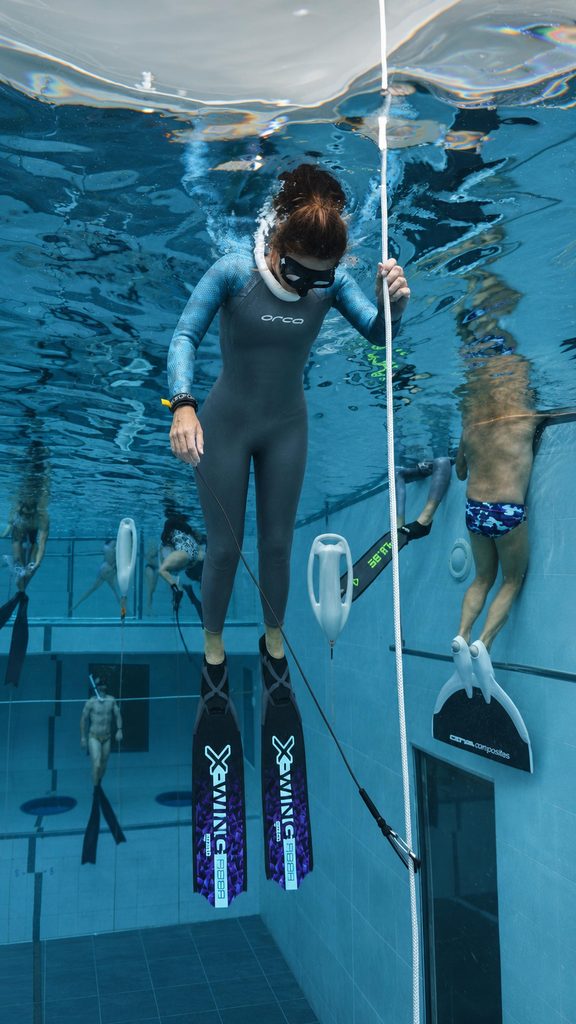
You feel a slight suction effect, but it is very limited at those depths. I specifically wanted to try descending without equalising the mask, only my ears, and I managed it easily.
I believe there may be scope to go deeper than 23 metres without having to equalise the mask. Overall, the fit and comfort were excellent. No water entered the mask at any point,” commented Sara Gonnelli after the day of testing at Y-40.
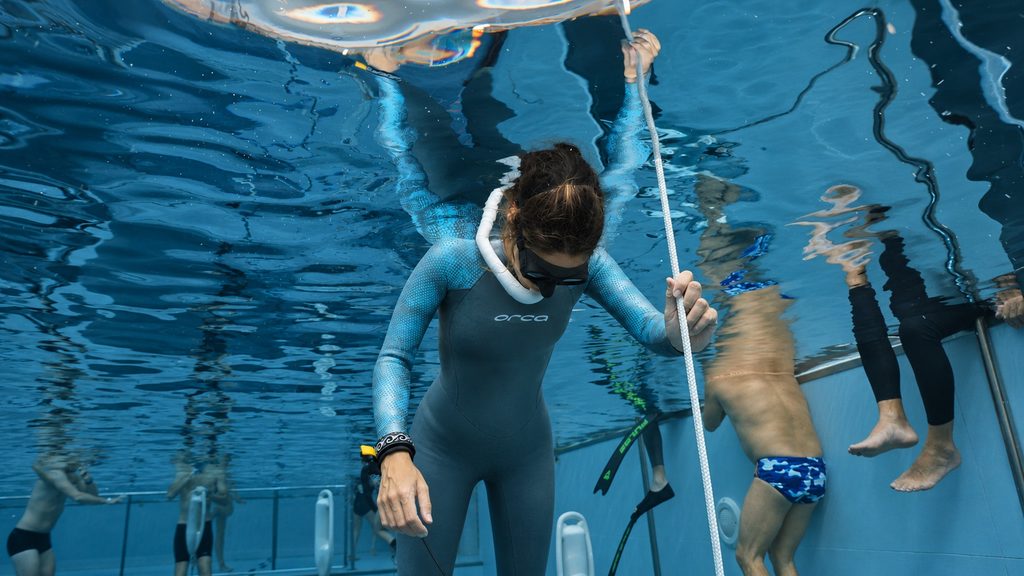
Sara Gonnelli reported no need to add air to the mask from the surface to 23 metres, with only slight suction, excellent comfort and no water ingress. Her impression that she could go deeper remains a possibility to explore in further testing.
Mares Flexshell: the verdict at Y-40
The Mares Flexshell freediving mask combines an exceptionally low 74 cc internal volume with a flexible structure that delivered excellent comfort and self-equalising behaviour during these tests.

Both instructors reported descending through their respective test ranges without adding air to the mask. Gianni Bicchi identified reduced visibility at greater depths as the main compromise, while Sara Gonnelli highlighted the comfortable fit and watertight seal.
These results describe the experiences of the two testers, rather than a guaranteed self-equalisation depth for every freediver. Mask self-equalisation is also distinct from ear equalisation, which remains necessary throughout the descent.