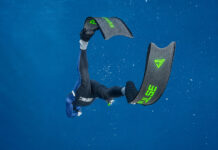
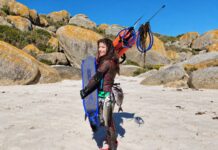
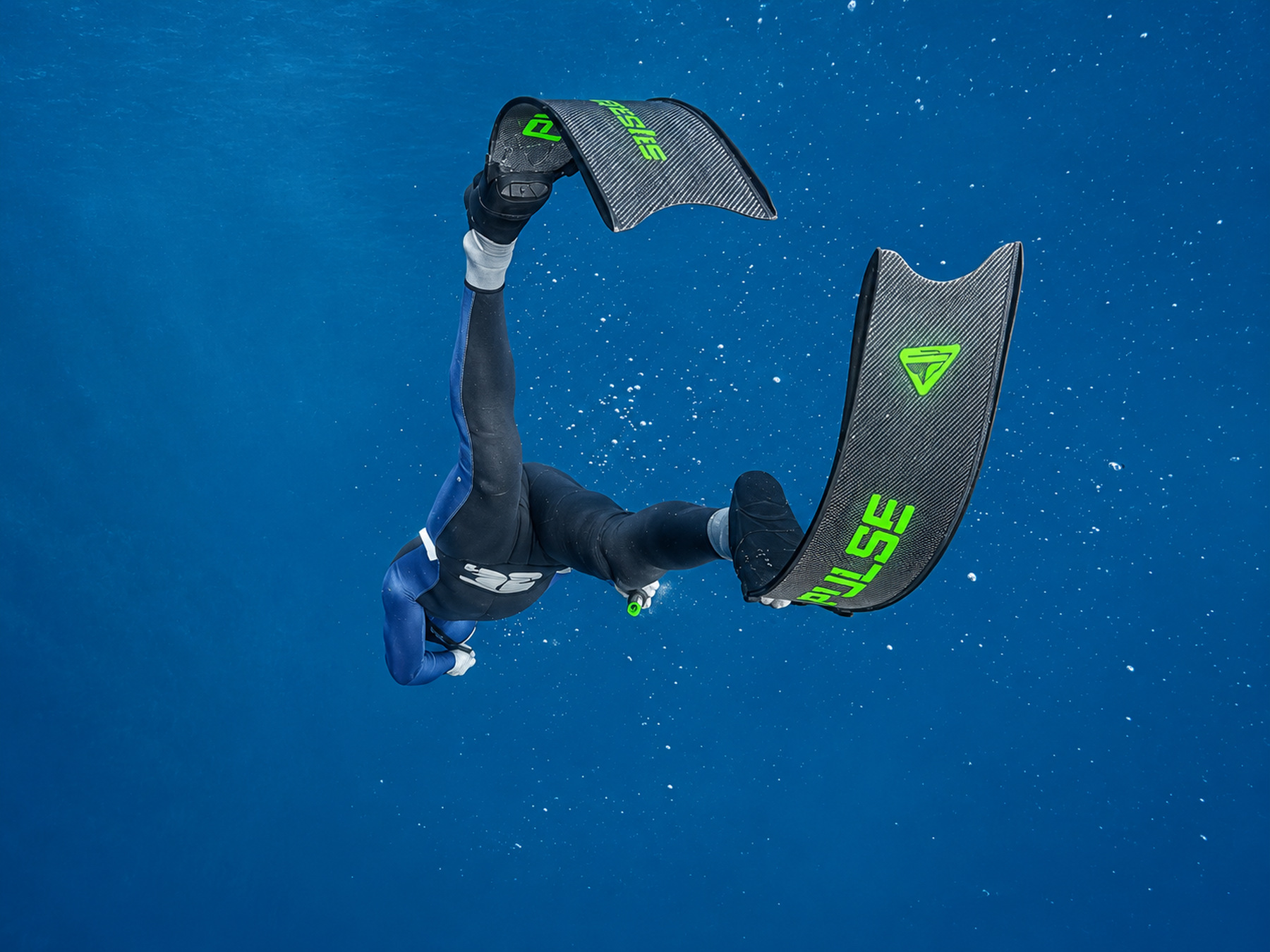
The Cetma Pulse freediving and spearfishing fins were tested by the Apnea Passion Team in the pool, during deep dives at Y-40 and at sea, both on the line and while spearfishing. These different settings allowed our testers to assess their versatility, comfort and responsiveness, while identifying their strengths and potential limitations.
Following our X-Rays technical presentation, this review focuses on the experiences of Gianni Bicchi, Gaspare Battaglia and Carlo Forni. Their feedback highlights a shared impression: the Cetma Pulse are easy-to-use, versatile fins that adapt well to different diving conditions and kicking styles.
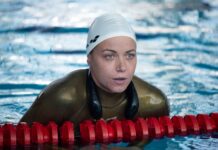
Gianni Bicchi: freediving at Y-40 and pool training
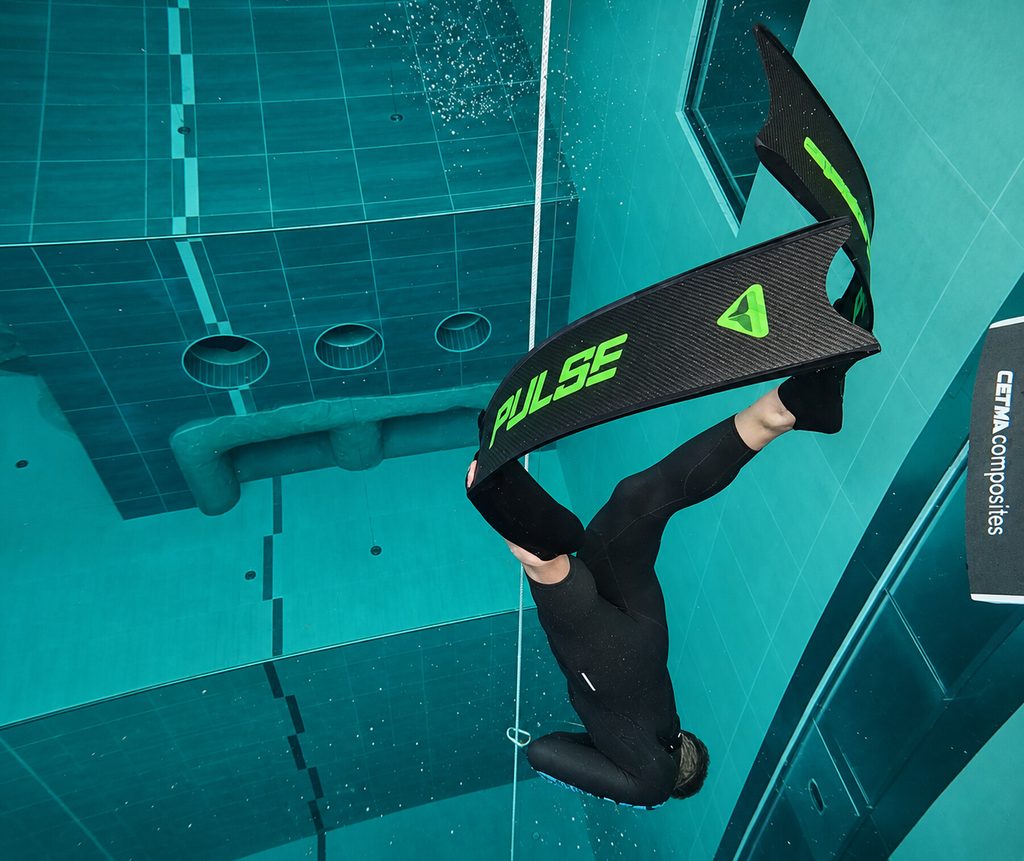
“I already own a pair of Cetma Prana fins, which I am very happy with. The Cetma Pulse impressed me with their ability to adapt to different settings, from deep freediving at Y-40, where I took them down to 42 metres, to pool training.
“Easy to use and capable performers, these fins stand out above all for their versatility and accessibility. In my experience, they may not quite match the peak deep-diving performance of some other Cetma Composites models with interchangeable blades, but they perform very well across a wide range of uses.
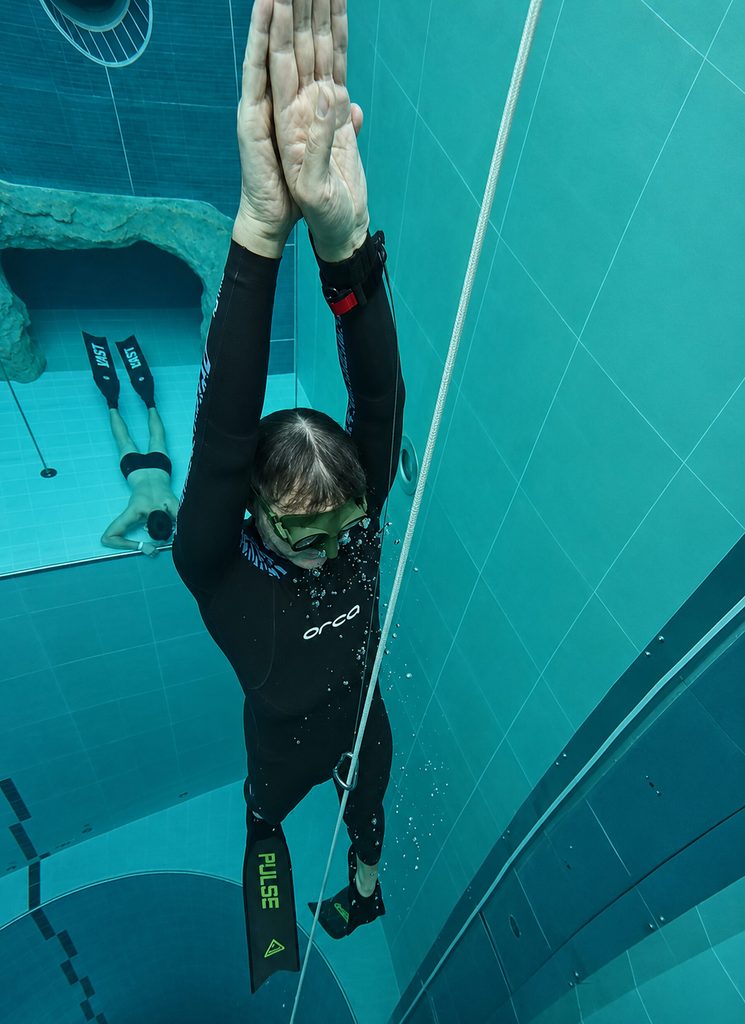
Shorter blades for easier handling
“The Pulse blades have the same width as my Prana blades but are 10 cm shorter (660 cm vs 670 cm). This more compact size makes them particularly easy to use in the pool, including during our freediving courses at ApneaLab by DNP.
“I have already recommended them to some of my athletes who are ready to move on from plastic fins and want a pair that can cover several needs: pool training, open-water freediving and spearfishing.”
Gaspare Battaglia: constant-weight freediving at sea
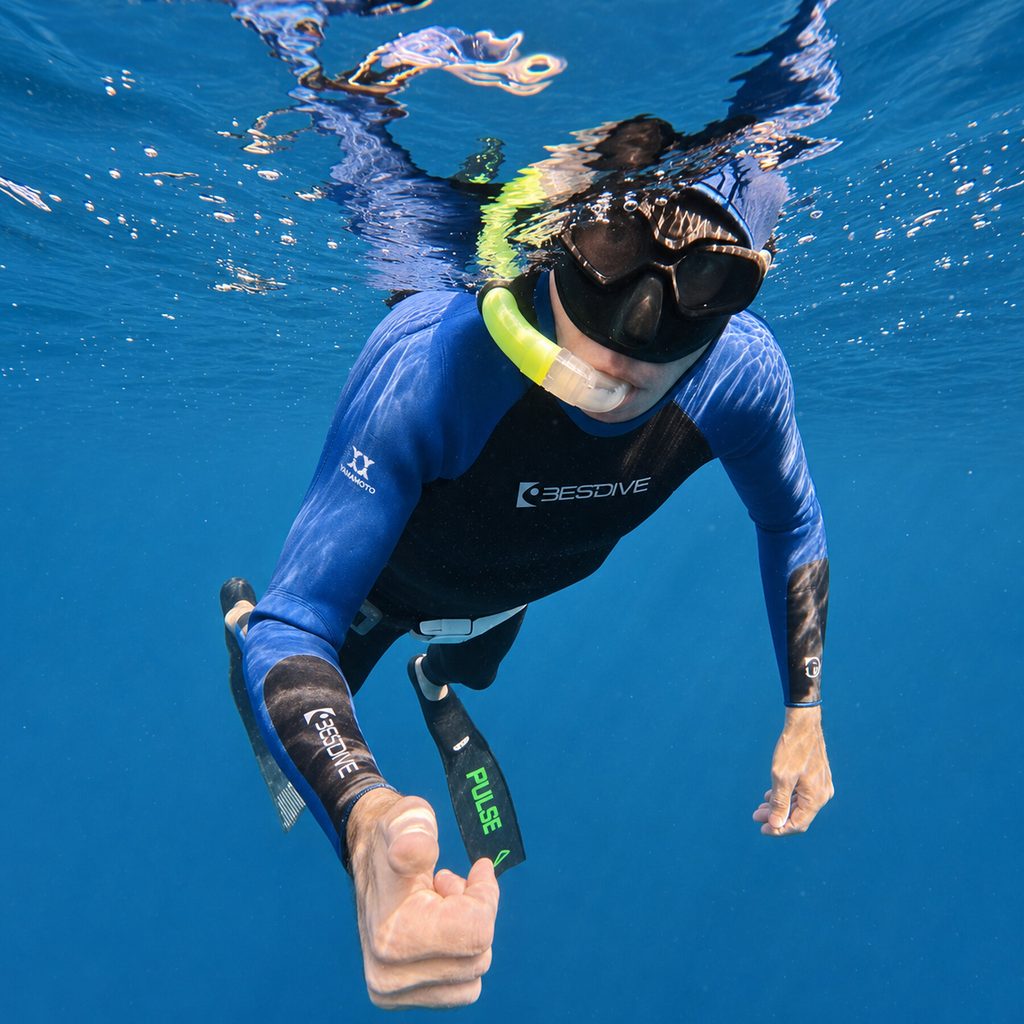
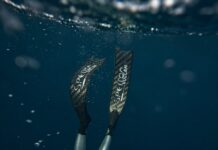
“During a morning of testing for Apnea Passion at Elba Island, I had the opportunity to try the new Cetma Pulse fins. I tested them on the line during constant-weight dives to 25 metres.
“My first impression was of an extremely light, soft-feeling fin. What struck me most, however, was how they behaved during the kick.
A natural, fluid kicking action
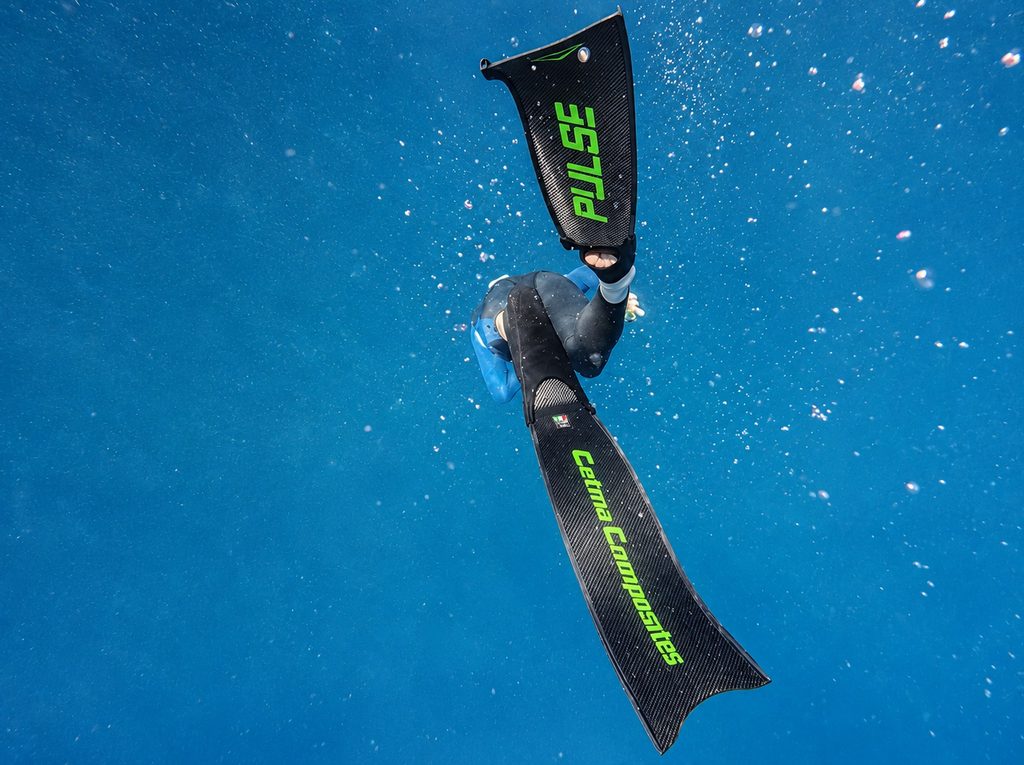
“I am used to diving with carbon fins and a relatively narrow kick. With the Pulse, almost without noticing it, I began to increase my kicking amplitude slightly, while retaining a very natural, fluid movement.
“I was not aiming for any particular performance target, but from the first dives on the line I could sense the potential of these fins, especially for spearfishing.
“I still want to test them in dynamic apnea and assess their behaviour when pushing performance further. For now, my first impression is definitely positive.”
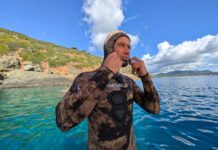
Carlo Forni: spearfishing and surface transfers
“The ease of use of the Cetma Pulse is immediately apparent. During my tests, they adapted well to different situations and kicking styles, making them convincing all-rounders for the varied demands of spearfishing.
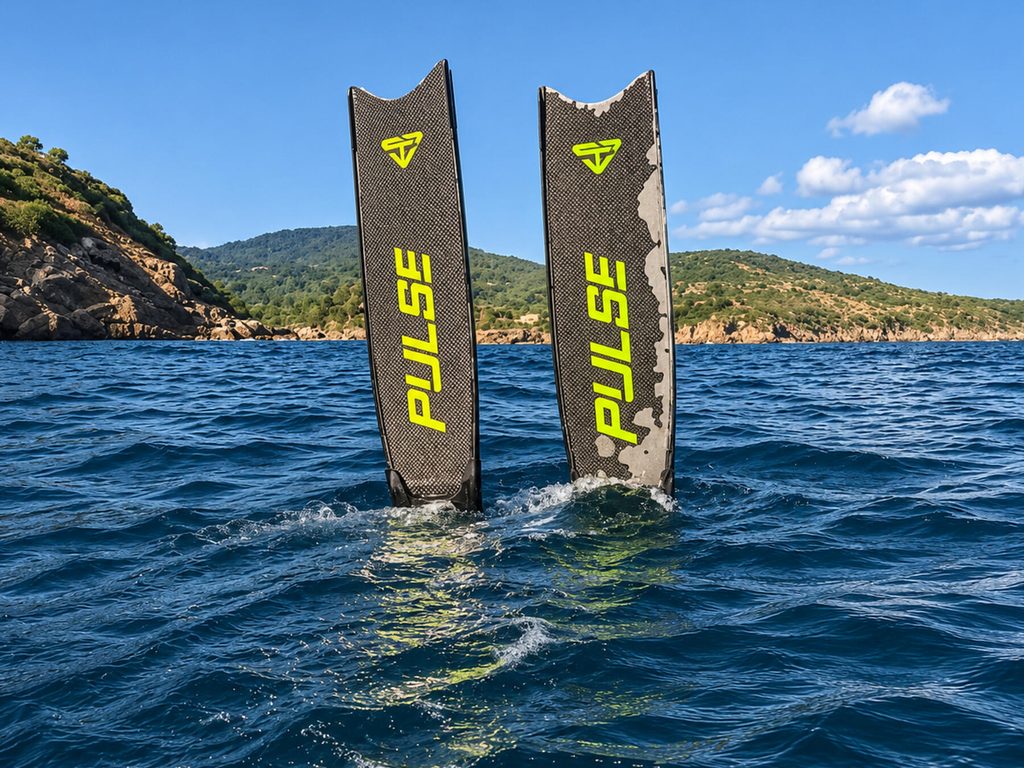
This versatility matters to me because I often cover long distances on the surface, moving along after entering the water at one spot. From these surface swims to deeper dives, the Pulse felt consistently easy to use.”
Responsive thrust when leaving the bottom
“When spearfishing, I generally dive in constant weight to a maximum depth of around 20 metres. The Pulse felt responsive on the descent, but even more noticeably when pushing off the bottom and beginning the ascent, delivering readily available thrust.
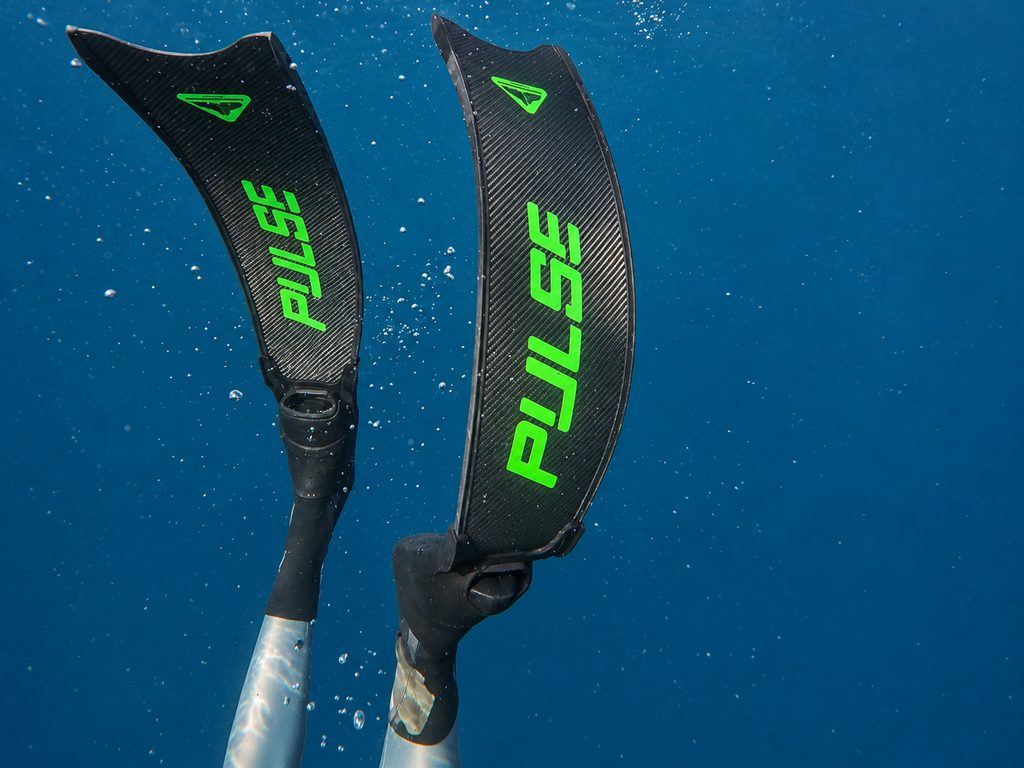
I tried both narrow and wider kicks, and the fins worked well with each technique. However, a narrower kick still felt clearly more efficient.”
A 33° blade angle for ankle comfort
“The 33° blade angle contributes to a comfortable kicking action, reducing the need to extend the ankle excessively. I could keep my ankles relaxed, which I appreciated during spearfishing, when staying relaxed and moving smoothly are particularly important.
The angle also helps during surface swimming, making it easier to keep the blades submerged. This reduces wasted movement when a blade breaks the surface and helps limit splashing and noise, especially when fishing in shallow water.”
S-Wing foot pockets: secure fit and power transfer
“The Cetma S-Wing foot pockets wrap securely around the feet and transmit movement effectively to the blades. Their fit and power transfer are among the features I appreciate most.
If I were to identify one area for improvement, it would be foot-pocket weight. A small reduction could make the overall experience even better.”
Smooth, reactive and quiet
“What I particularly liked about the Pulse was their combination of smooth flex and immediate response. They felt extremely reactive without making the kicking action abrupt, and adapted comfortably to the different techniques I tried.
For spearfishing, that smoothness also helps maintain a quiet, controlled kick and minimise disturbance around the fish.”
Cetma Pulse review: our verdict
Versatility, ease of use and a smooth, responsive kicking action are the main strengths identified by the Apnea Passion Team. Across pool sessions, line diving and spearfishing, the Cetma Pulse adapted well to the different situations explored by our testers.
Gianni Bicchi highlighted their suitability for divers progressing from plastic fins who want one pair for several activities. Gaspare Battaglia praised their natural feel during constant-weight dives, while reserving his assessment of dynamic apnea and maximum performance for further testing. Carlo Forni particularly appreciated their responsiveness on ascent, ankle comfort and behaviour during surface swimming.
The tests also identified potential limitations. Gianni felt that some other Cetma models may offer slightly more at the upper end of deep-diving performance, but of course that would require buying a model for each specific use. Carlo considered a reduction in S-Wing foot-pocket weight a possible improvement, still considering the design of such foot pockets a top level solution.
Based on these experiences, the Cetma Pulse are a strong option for freedivers and spearfishers looking for one versatile pair of fins for pool training, open-water diving and spearfishing.