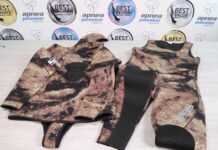


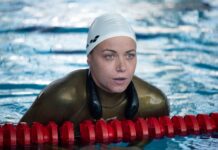

Polosub is one of the leading international manufacturers of tailor-made and standard wetsuits for spearfishing and freediving. Its name already reveals a strong connection with the coldest diving environments.
In Italian, polo means “pole”, as in Polo Nord and Polo Sud—the North Pole and South Pole. The name Polosub was therefore created as a wordplay combining polo with sub, the Italian abbreviation commonly used for a diver.
Spearfishing in the Arctic
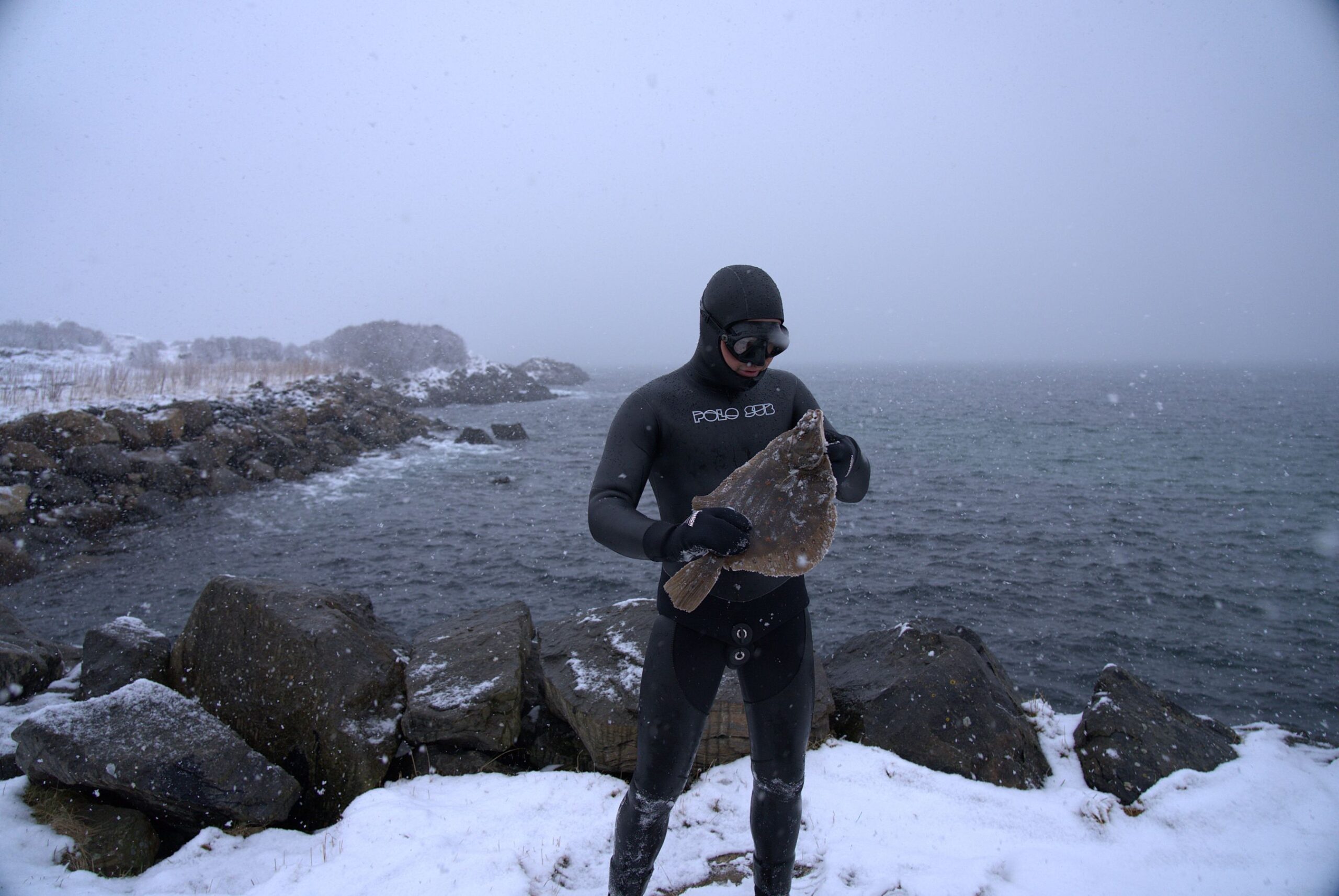
Spearfishing in the Arctic is a unique experience, offering spectacular scenery and waters rich in fish, including huge halibut. However, conditions both in and out of the water can be extreme, making the use of a purpose-designed cold-water wetsuit essential.

Thanks to the quality, precise fit and excellent thermal insulation of its thick neoprene wetsuits, Polosub is one of the leading manufacturers supplying equipment for spearfishing in such demanding environments.
Orca Watching in Extreme Cold Water
Polosub wetsuits are currently chosen by many spearos and freedivers across Northern Europe, as well as in other cold regions, including Chile and the far north of the United States.
In recent years, swimming and freediving with orcas has become an increasingly popular experience. Specialized guides take participants into the water to observe these extraordinary marine mammals in their natural environment.

These excursions generally take place during Autumn and early Winter, particularly in Norway, when water and air temperatures can be extremely low. Wearing a properly designed thick wetsuit is therefore essential to ensure adequate thermal protection throughout the experience.
Over 30 years of experience in cold-water wetsuits
Founded more than 30 years ago, Polosub has acquired extensive experience in designing and manufacturing wetsuits for spearfishing and freediving. Over the years, the Italian company has also specialized in wetsuits developed for extremely cold water and harsh weather conditions.
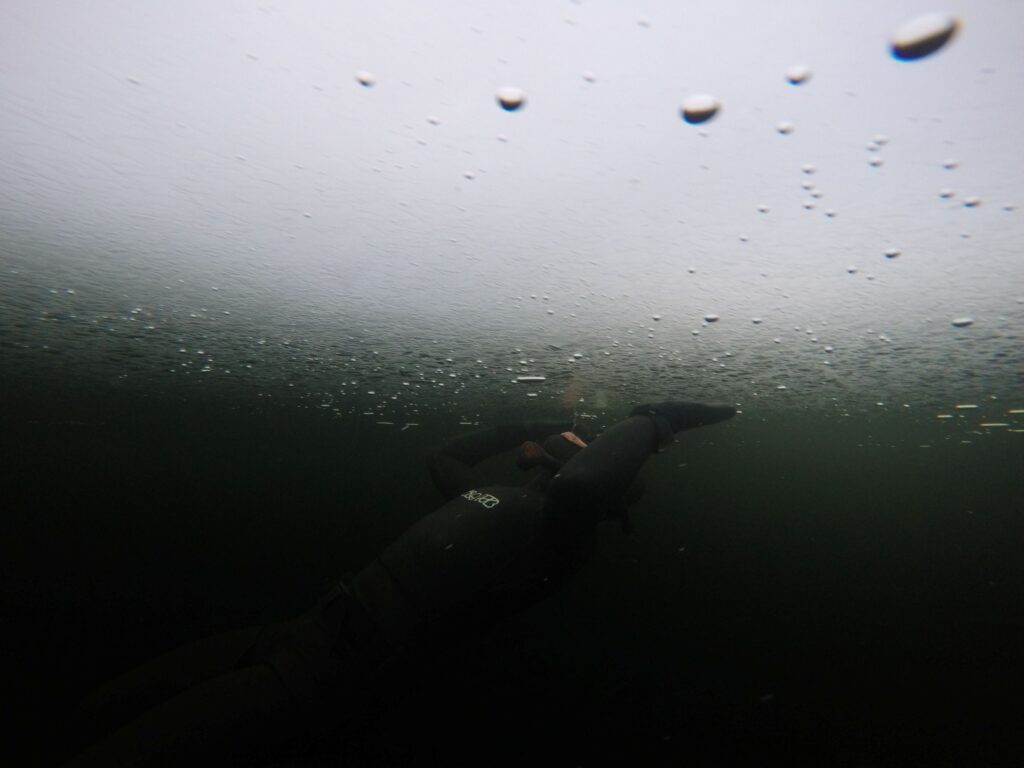
This experience began in the northern Adriatic Sea, where many spearos and freedivers face particularly demanding conditions during Winter. The strong and freezing Bora wind can make temperatures outside the water extremely low, while sea temperatures may fall below 10°C.
From the northern Adriatic, Polosub progressively expanded its expertise to colder seas and countries, developing wetsuits for divers operating close to the North and South Poles.
The importance of a precise cut with thick neoprene
Gluing 9, 10 or 11 mm neoprene is not necessarily more difficult than working with thinner materials. The real challenge lies in designing, cutting and sizing the wetsuit correctly.

A 9.5 mm neoprene sheet, for example, adds considerable thickness around the diver’s body. The pattern must therefore be adjusted accordingly, particularly around sensitive areas such as the neck, wrists and ankles. If these measurements are not correctly calculated, the wetsuit may feel excessively tight, restrict movement or reduce blood circulation.
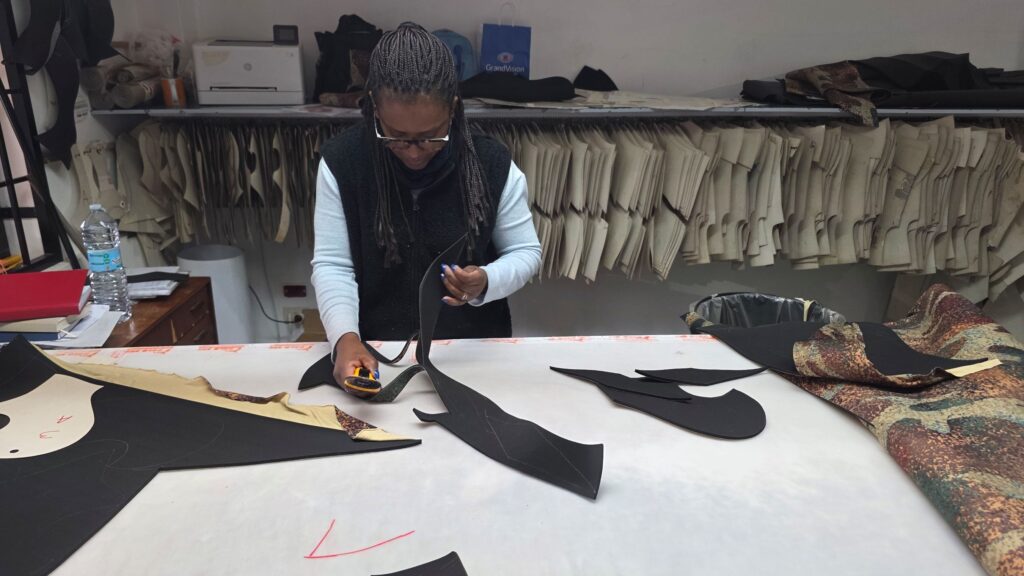
Polosub has developed specific expertise in producing thick neoprene wetsuits with an accurate anatomical cut. This is particularly important for tailor-made models, which must combine maximum thermal insulation with comfort and freedom of movement.

It is no coincidence that many videos showing freedivers and spearos diving in extreme environments, surrounded by ice, feature athletes wearing Polosub wetsuits.
Neoprene thicknesses up to 11.5 mm
An 11.5 mm wetsuit represents an extreme solution, but Polosub uses this thickness for very specific conditions: water temperatures close to 0°C, sub-zero air temperatures and strong, freezing winds.

Most Polosub cold-water wetsuits, however, have a thickness of approximately 9 to 9.5 mm. These models are used extensively in Northern Europe, including the Scandinavian Peninsula and particularly Norway, even in diving locations above the Arctic Circle.
In such environments, thermal protection is required both underwater and during the time spent outside, when wind chill can rapidly reduce the diver’s body temperature.
Smooth open-cell, lined or sandwich neoprene
Polosub wetsuits for extreme cold are generally made from smooth-skin neoprene on the outside and open-cell neoprene on the inside. The individual panels are glued together without stitching, helping preserve the flexibility and thermal insulation of the material.
Polosub can also produce cold-water wetsuits with a lined exterior and open-cell interior. Another option is Forza 3, the company’s sandwich neoprene construction, available in thicknesses of up to 9 mm.
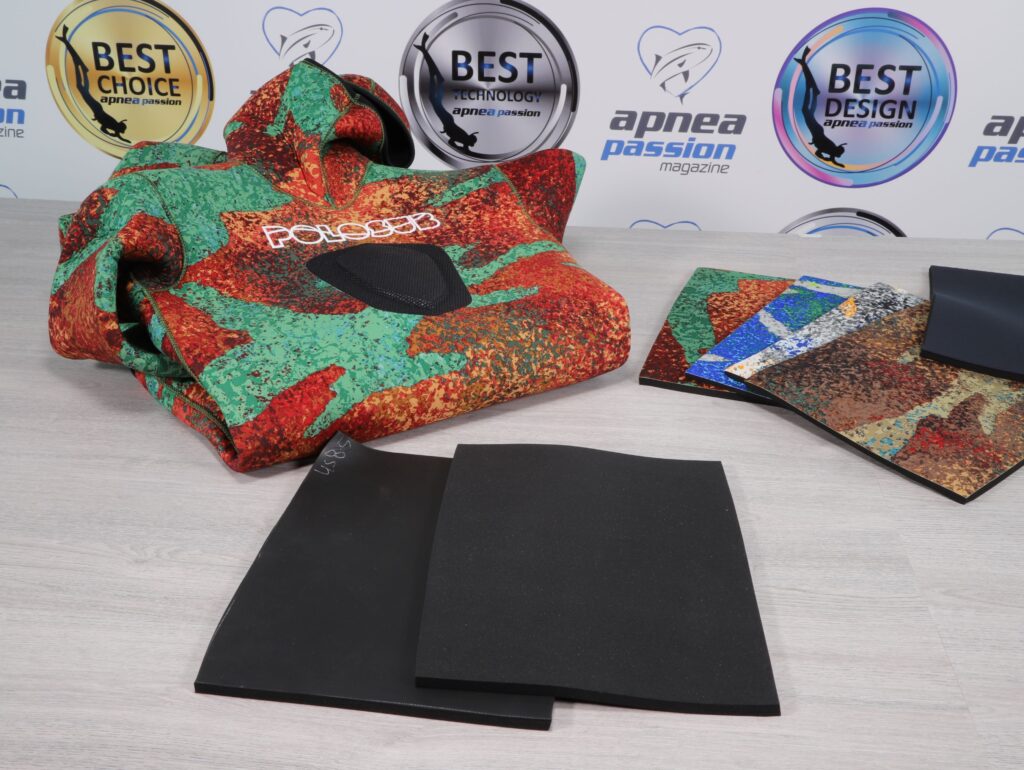
Each configuration offers different advantages in terms of warmth, flexibility, durability and resistance to damage. The most suitable solution therefore depends on the intended use, water temperature and conditions both above and below the surface.
No fixed neoprene brand, but the best material for each wetsuit
Since its foundation, Polosub has chosen not to promote a specific neoprene brand for its wetsuits. This differs from the approach adopted by many wetsuit manufacturers, particularly specialist companies producing tailor-made models.

Instead, Polosub selects the most suitable neoprene according to its actual characteristics and the requirements of each wetsuit. Density, elasticity, compression resistance, durability and thermal insulation can vary significantly between different types and production batches.
The company therefore focuses on the quality and performance of the finished wetsuit rather than relying on the commercial appeal of a particular neoprene brand. For extreme cold-water diving, this approach is especially important, as material selection, anatomical cut and manufacturing accuracy must work together to provide effective and reliable thermal protection. best meets the high quality standards needed.
To buy a Polosub wetsuit at 10% discount, subscribe annually to Apneapassion.com International web magazine for only 12€ and receive a promo code.