






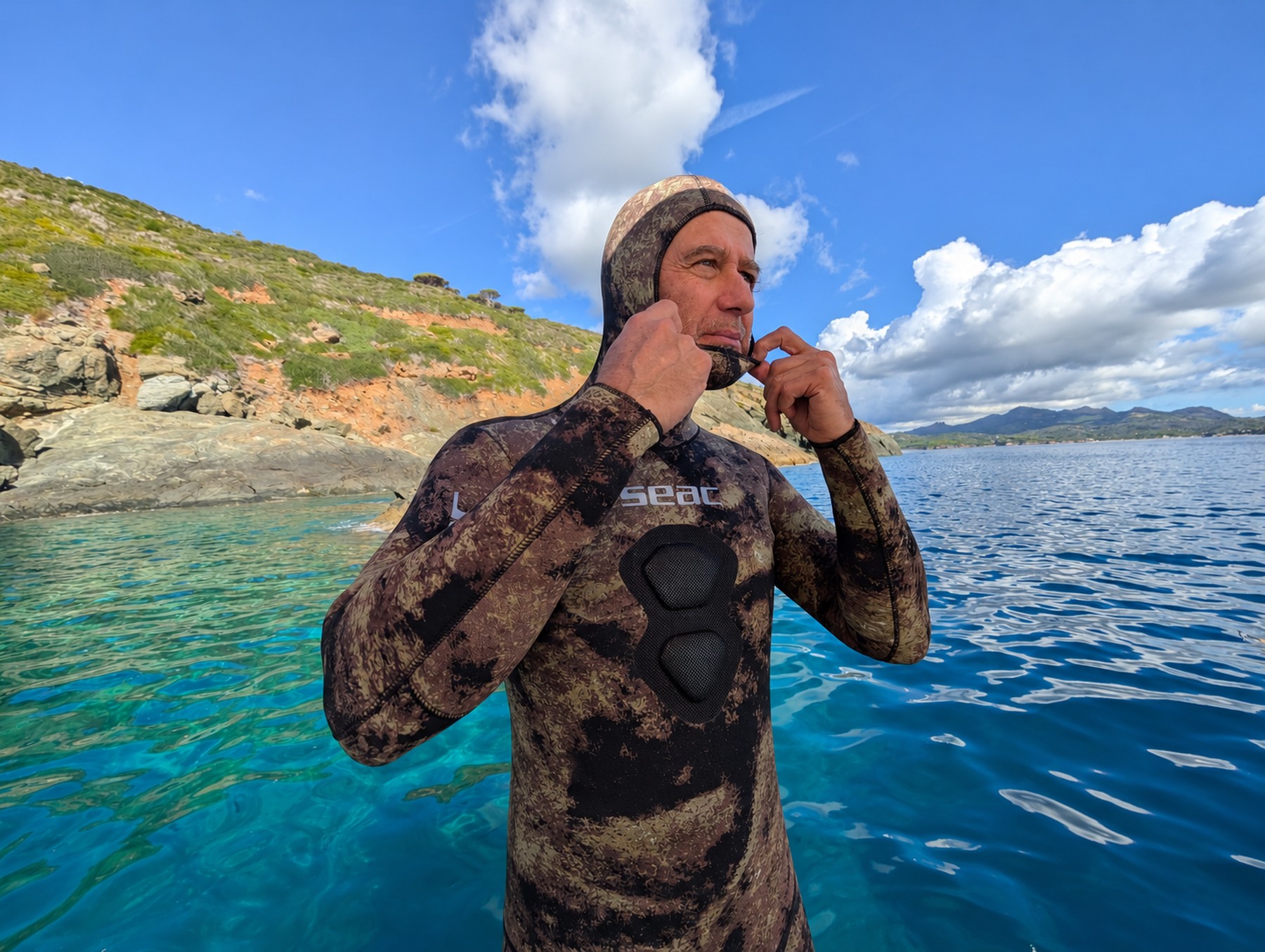
The Seac Royal Camo 5 mm is a double-lined spearfishing wetsuit that prioritises ease of use, comfort and resistance to wear. Our in-water test confirmed the practical benefits of its internal lining and Long John pants, while highlighting the compromises in flexibility and water sealing compared with an open-cell wetsuit.
We previously presented its construction and features in our Seac Royal Camo X-Rays article. Here, we focus on how the 5 mm version performs when getting changed and spearfishing.
Putting on the Seac Royal Camo
The internal fabric lining makes the Seac Royal Camo easy to put on without soapy water or wetsuit lubricant. It slides particularly well over completely dry skin; getting changed is less straightforward when the skin is damp or sweaty.
This is a practical advantage when preparing for a dive, especially during the colder months, when avoiding water inside the wetsuit before entering the sea makes changing more comfortable.
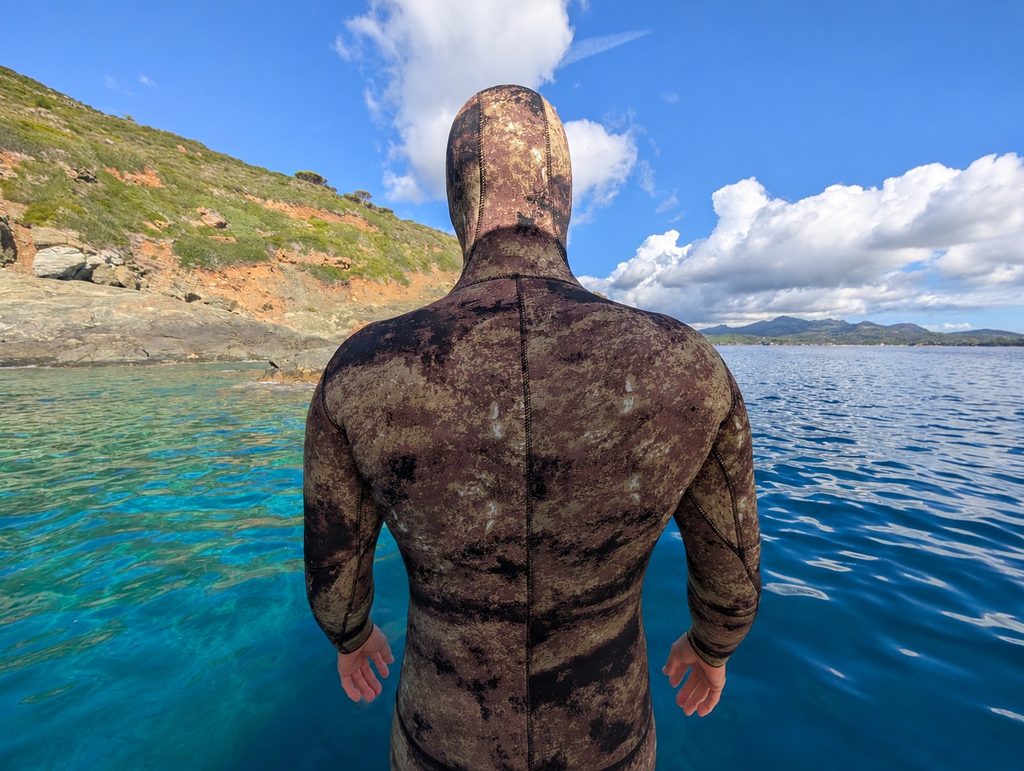
The external lining also helps. It allows a firmer grip on the material and reduces the risk of fingernail damage compared with an exposed smooth-skin exterior. Pulling the jacket and pants into position therefore requires less care, although the material should still be handled sensibly.
Double-lined neoprene is generally less stretchy than comparable neoprene with a lining on only one side. However, for spearfishers who prioritise straightforward dressing and robust construction, this is a worthwhile compromise.
Long John pants: a practical advantage
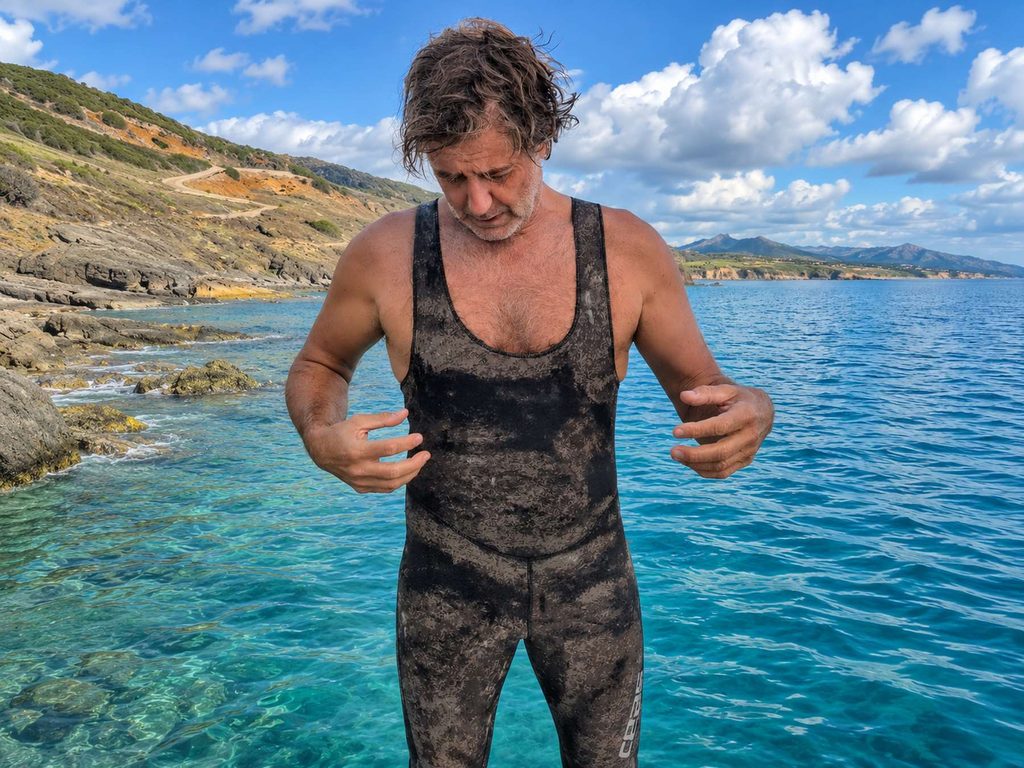
The Long John pants with shoulder straps make putting on the jacket easier. With waist-high pants, pulling the jacket down over the torso can push the waistband down or cause it to roll.
The shoulder straps keep the Long John pants in position, eliminating this inconvenience during our test. Their extended coverage over the torso also provides an additional layer of neoprene beneath the jacket.
Fit and comfort in the water
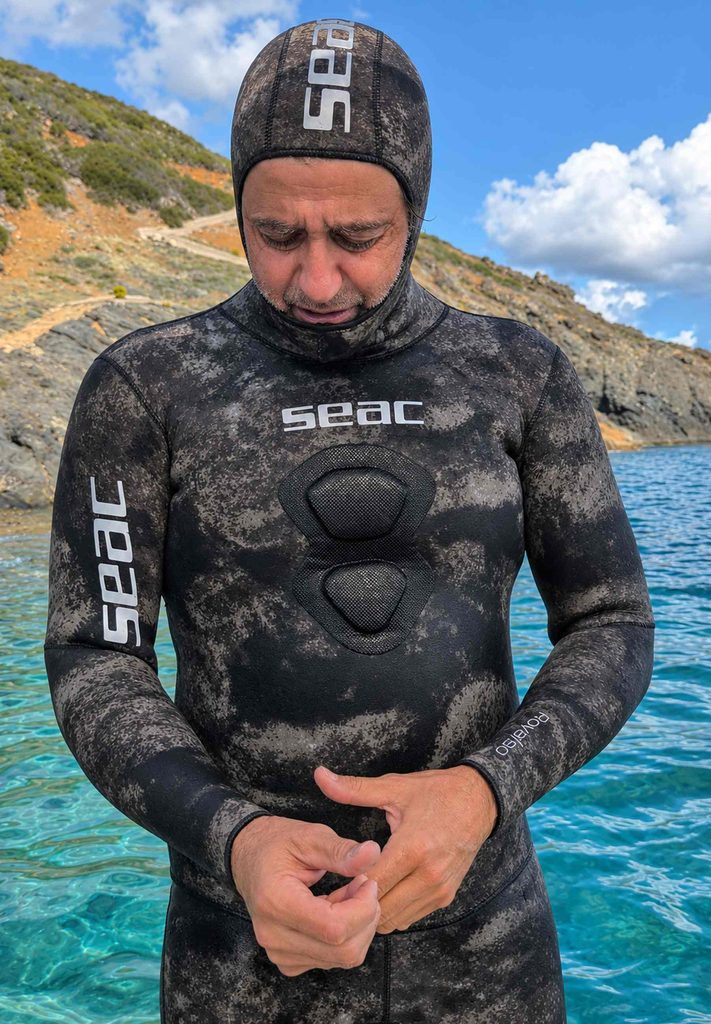
The Seac Royal Camo has a comfortable cut, without an excessively tight fit around the wrists, ankles or face opening. This makes putting it on and taking it off easier and suits its emphasis on accessibility and ease of use.
The trade-off is a less effective seal against water entry. The internal fabric lining also does not grip the skin in the same way as an open-cell interior.
During our test, entering the water abruptly could allow water to flush in between the jacket and pants. A controlled entry helps reduce this initial water ingress. The Long John construction offers useful protection here, keeping the abdomen and chest covered even when water enters beneath the jacket.
Overall, we found the Seac Royal Camo 5 mm comfortable to wear, despite the more limited stretch of its double-lined construction. Its comfort comes primarily from the cut and fit, rather than exceptionally soft or elastic neoprene.
Thermal insulation
Thermal performance is the main compromise we identified in the Seac Royal Camo 5 mm. It provides useful protection, but its relatively relaxed openings and internally lined construction favour convenience over the close seal of a well-fitting open-cell wetsuit.
Water circulation matters: when fresh water enters and replaces the water already warmed by the body, heat loss increases. The additional torso coverage of the Long John pants is beneficial, but it does not completely compensate for flushing.
For this reason, we see the Royal Camo as a practical choice for shorter recreational spearfishing sessions, when easy changing and durability take priority. For prolonged sessions in cold water, a closer-fitting open-cell model would generally be our preferred option.
Knee protection and resistance to wear
Durability is one of the strongest arguments in favour of the Seac Royal Camo. The external fabric lining protects the neoprene during dressing and provides a useful barrier against abrasion when diving close to rocks.
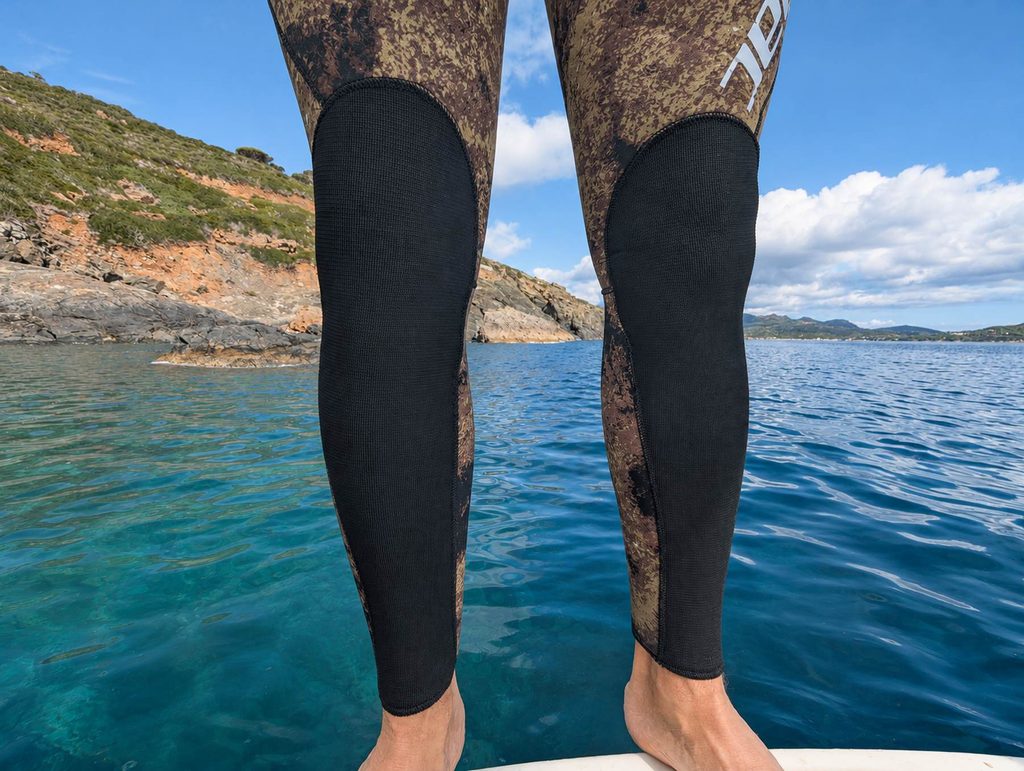
The knees feature long Supratex reinforcement panels, combining generous coverage with flexibility. During use, these provide protection without making the knee area excessively stiff.
There are no dedicated elbow pads. The external lining offers basic abrasion resistance in this area which can be enough in most conditions.
For spearfishers who regularly operate close to the seabed, this combination of external lining and knee protection makes the Royal Camo an appealing option. Its construction favours resistance to everyday wear, although long-term service life will depend on use and care.
Chest loading pad
The chest loading area features Melco tape reinforcement and two separate neoprene inserts.
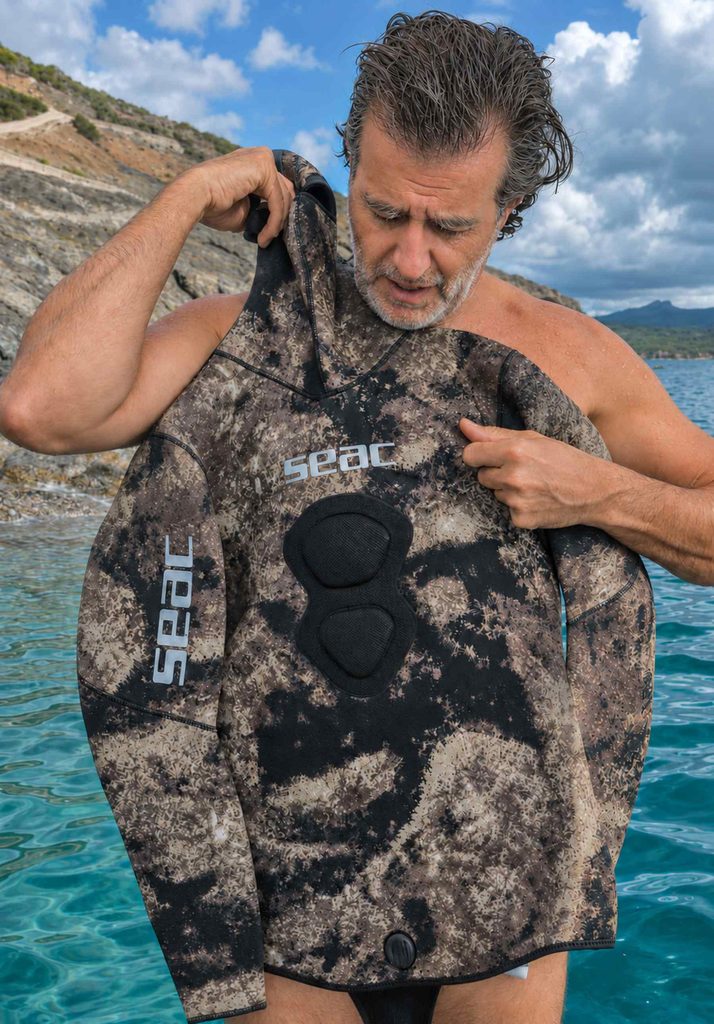
Using two smaller inserts instead of one continuous panel helps keep the chest area flexible. At the same time, the stepped profile helps stabilise the speargun butt during loading.
We found the loading pad sufficiently wide and resistant, offering a useful balance between support and freedom of movement.
Final verdict: who is the Seac Royal Camo for?
The Seac Royal Camo 5 mm is a convincing choice for spearfishers who want a wetsuit that is easy to put on, comfortable and resistant to abrasion. Its internal lining, Long John pants and reinforced knees make it particularly approachable for beginners and intermediate users who value practical equipment.
Experienced spearfishers may also appreciate its robust construction, especially for shallow-water hunting around rocks, where contact with the seabed is frequent.
The main compromises are reduced stretch and a less effective water seal compared with an open-cell wetsuit. If maximum thermal efficiency during prolonged sessions is the priority, those limitations deserve consideration.
The range includes 3.5, 5 and 7 mm thicknesses, with six sizes: S, M, L, XL, 2XL and 3XL. Pants and Jacket cannot be purchased separately. Choosing the correct fit remains essential, while the three thicknesses permit the best choice for most water temperatures.
Our verdict: the Seac Royal Camo puts practical handling and durability first, making it a strong option for recreational spearfishing when those qualities matter more than maximum elasticity and thermal performance.