






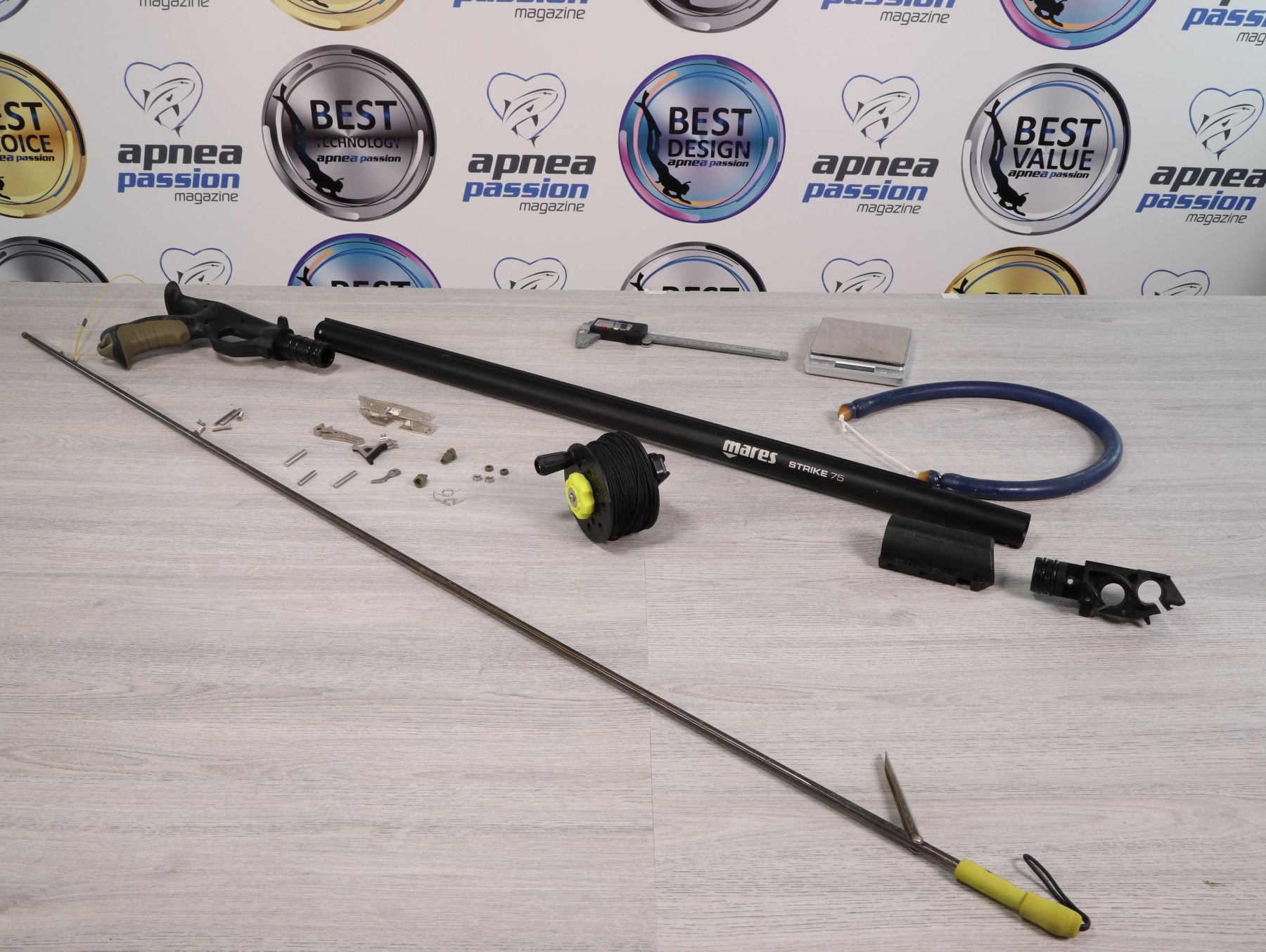
The Mares Strike speargun has achieved good commercial success, although many of its technical characteristics are not immediately visible. We completely disassembled the speargun to analyse its construction, materials and individual components.
Handle
Design and removable grip
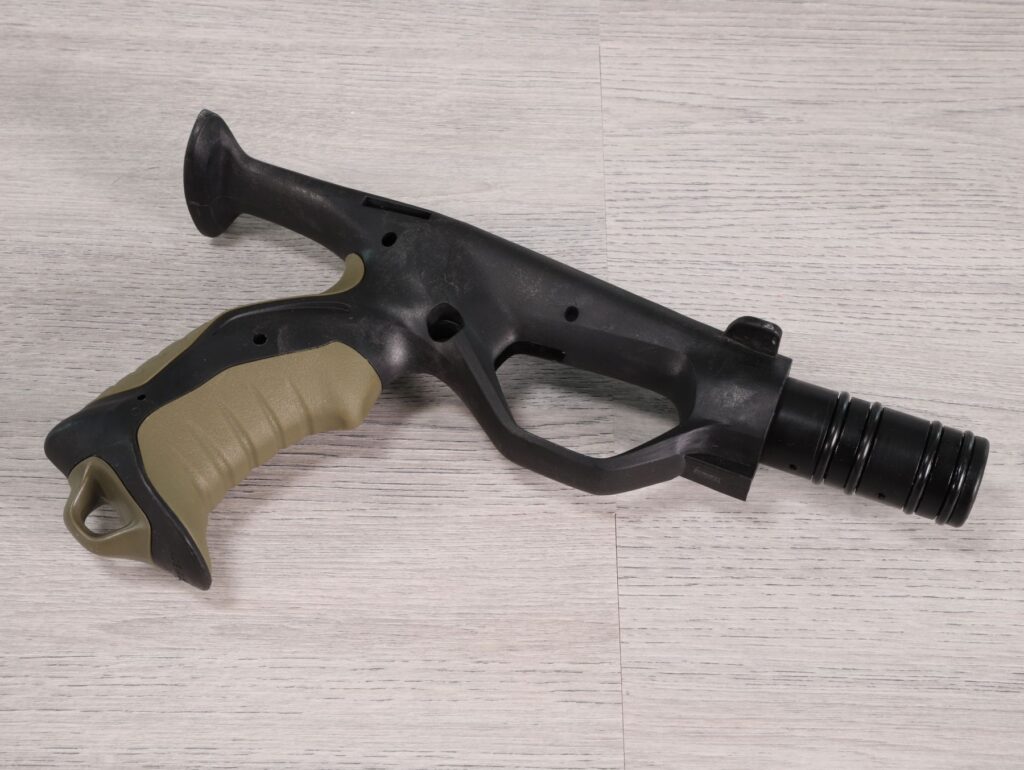
The handle is made from glass–loaded nylon and has an anatomical but symmetrical profile, suitable for both right- and left-handed users.
The grip is complete with three removable elements, secured by two stainless-steel pins. They are military green on the Strike Base and yellow on the Strike Element, Strike and Strike Polygon. The yellow version is easier to locate on the seabed, while the coloured sections remain almost entirely covered by the hand while fishing.
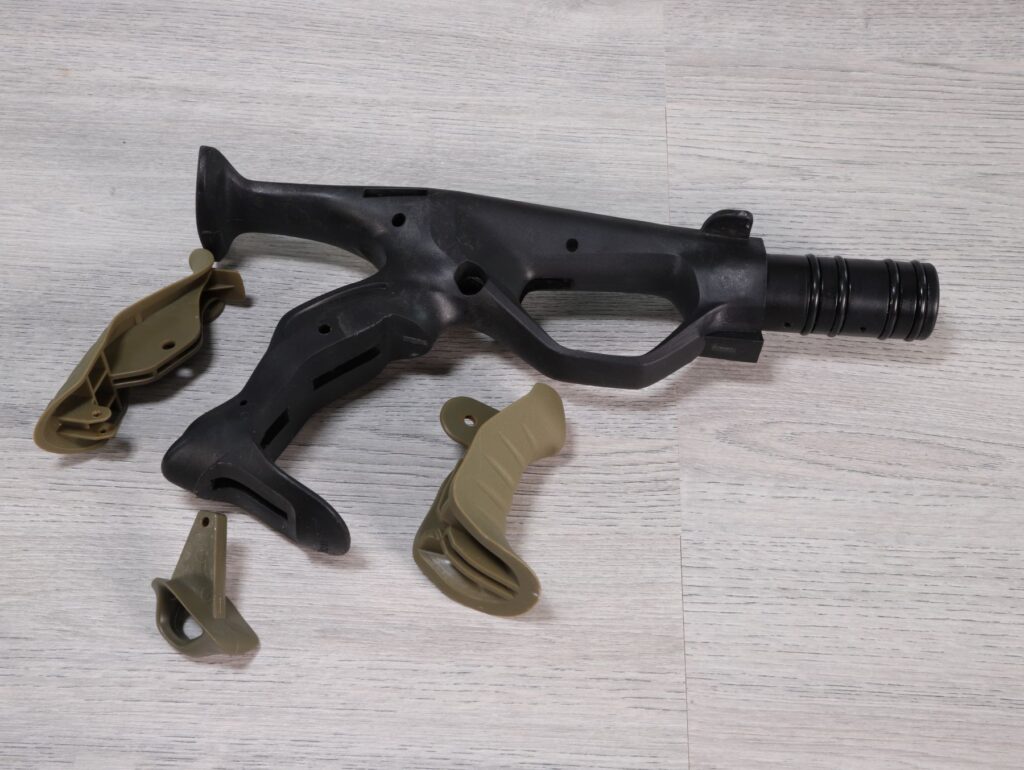
The rigid grip elements have a rough surface that provides good anti-slip effect. The lower section includes a through-hole for connecting the speargun to a line, bungee and buoy.
One-piece structure
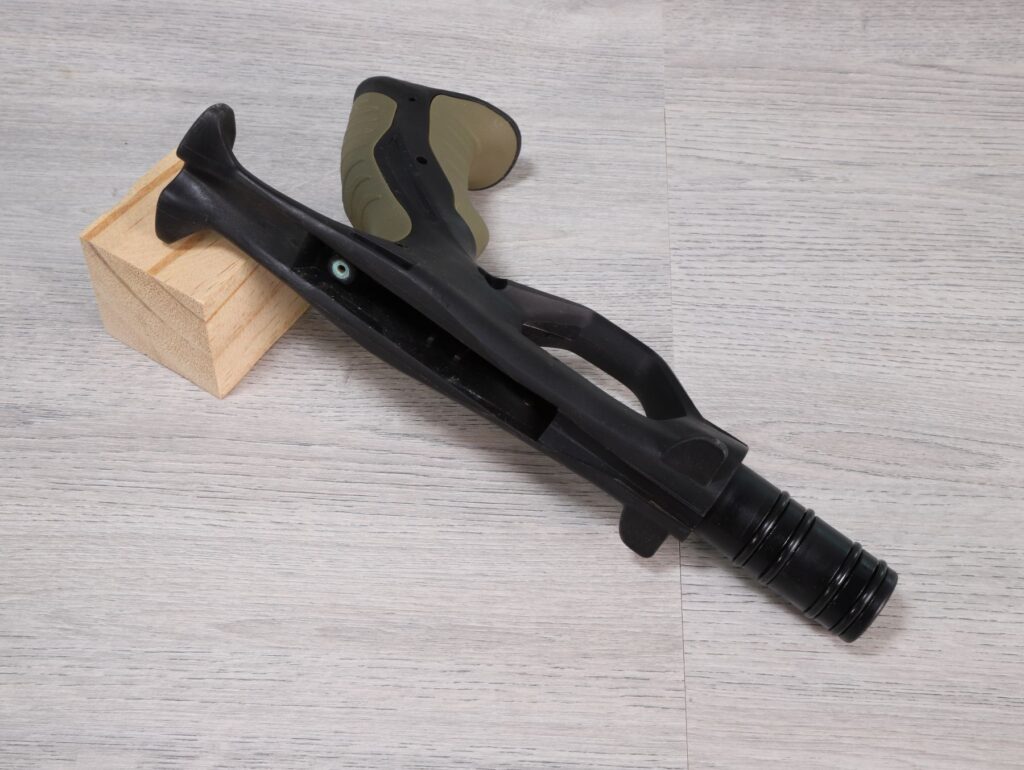
The handle body and loading butt form a single glass-filled nylon structure. This eliminates a joint between the two components and contributes to overall rigidity.
Two well designed and dimensioned lateral wings keep the monofilament away from the line of sight.
Seal with two pairs of O-rings
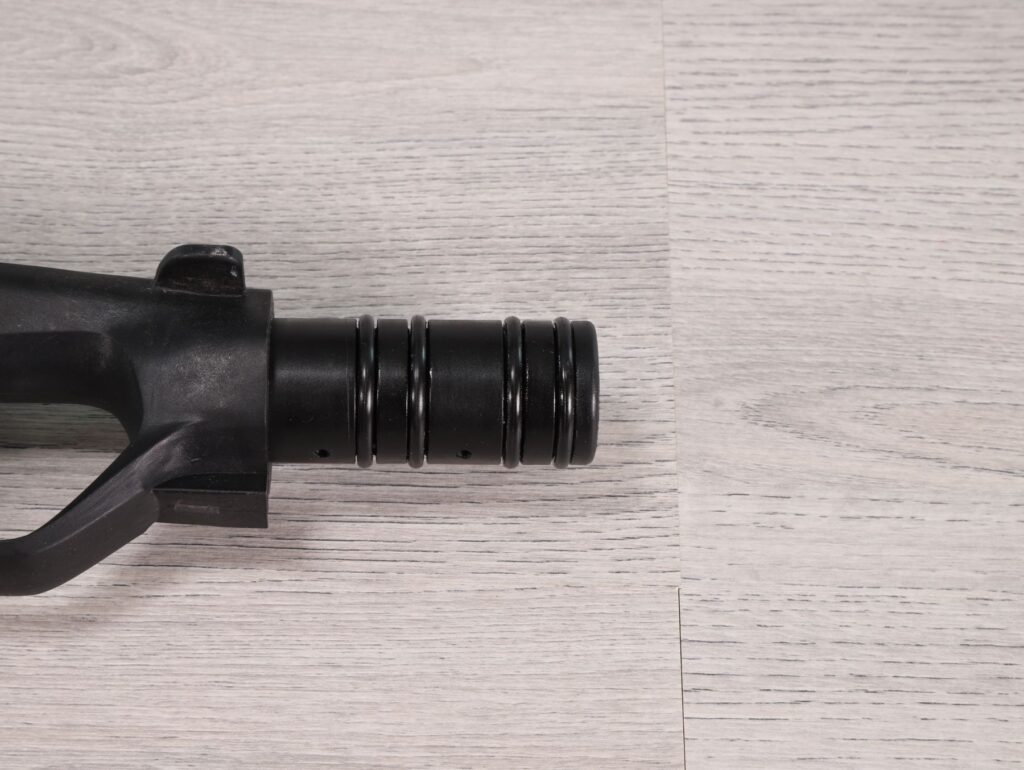
The handle connects to the barrel through a 26 mm-diameter cylindrical insert fitted with two pairs of O-rings. The length of the insert contributes to the rigidity of the connection, while the four O-rings provide a reliable watertight seal.
Unlike internal barrel plugs, this solution preserves most of the barrel’s internal air volume, with a positive effect on buoyancy. The handle is secured to the barrel by two screws.
Stainless-steel inverted trigger mechanism
The Mares Strike uses an inverted trigger mechanism with stainless-steel structural and moving components.
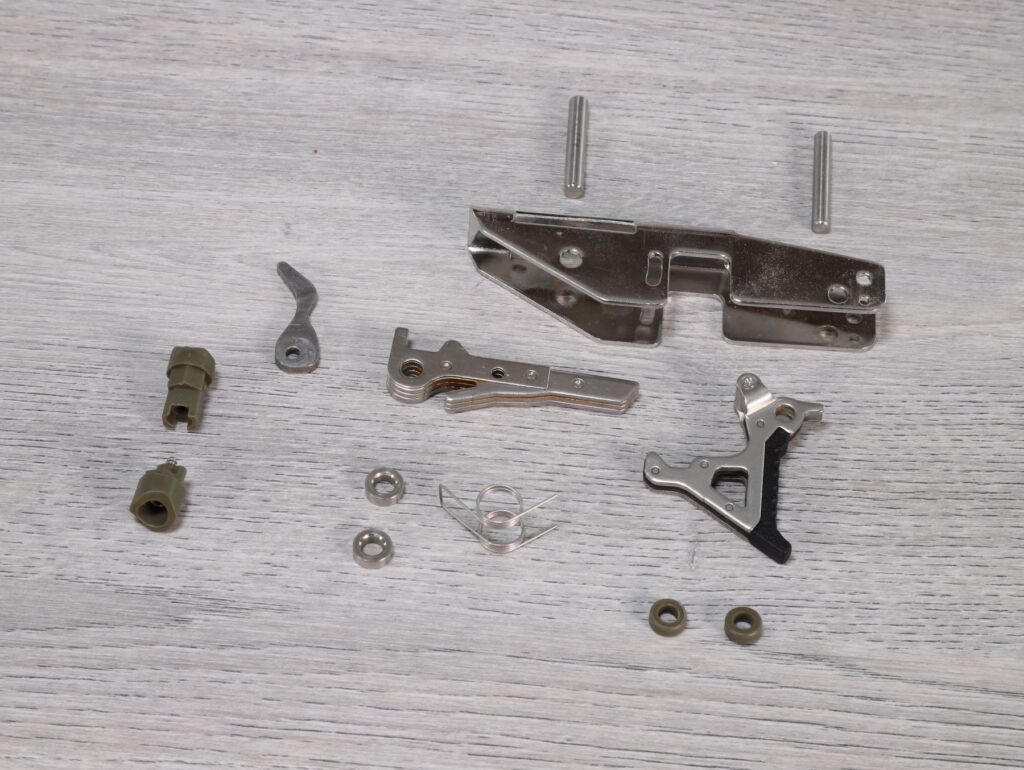
The cassette of the release mechanism is in stainless steel with 1.5 mm thick walls, which is a good value to have high rigidity, but not excessive to avoid extra weight.
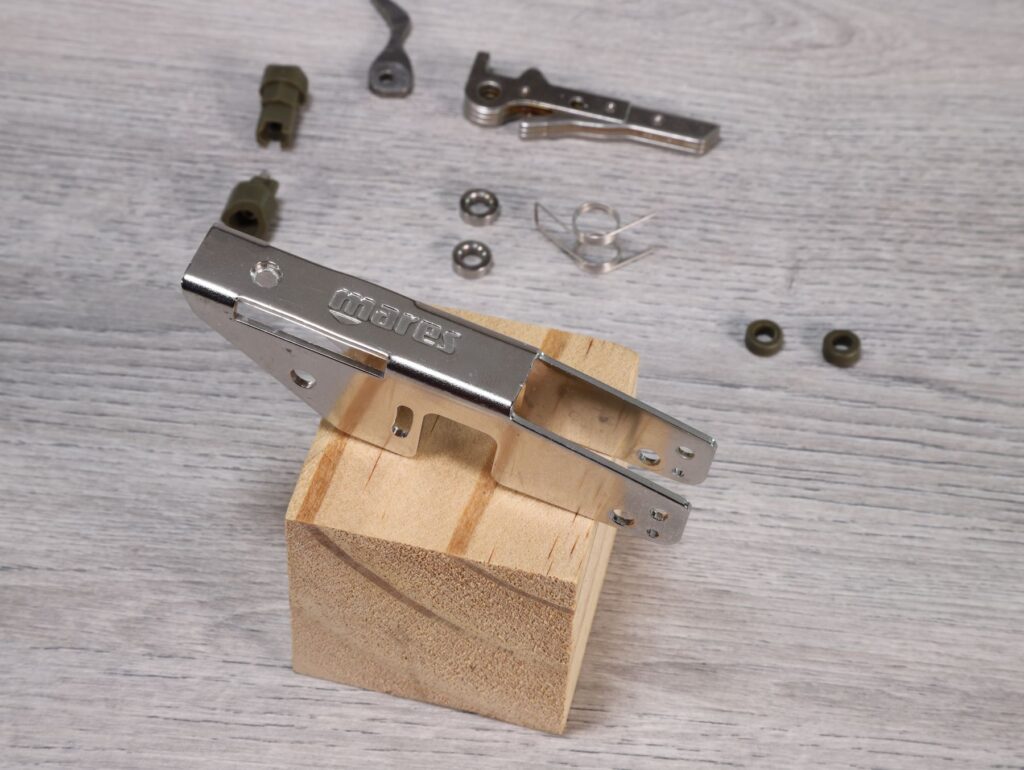
A stainless-steel roller mounted on the trigger lever reduces friction at the contact point with the sear. The trigger lever rotates around a stainless-steel pivot pin and uses two lateral PTFE washers to further reduce friction.
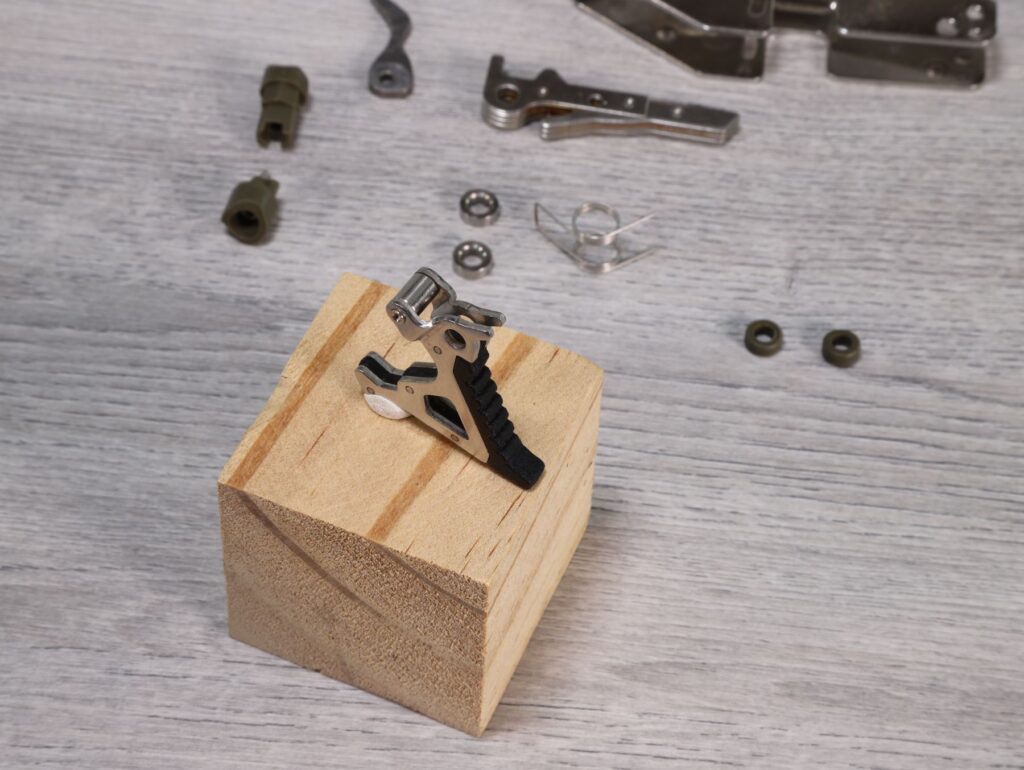
The trigger blade has a polymer cover with a serrated surface, providing additional grip.
The sear consists of three stacked stainless-steel plates. After approximately six months and almost 50 spearfishing sessions, we found no visible corrosion on the mechanism.
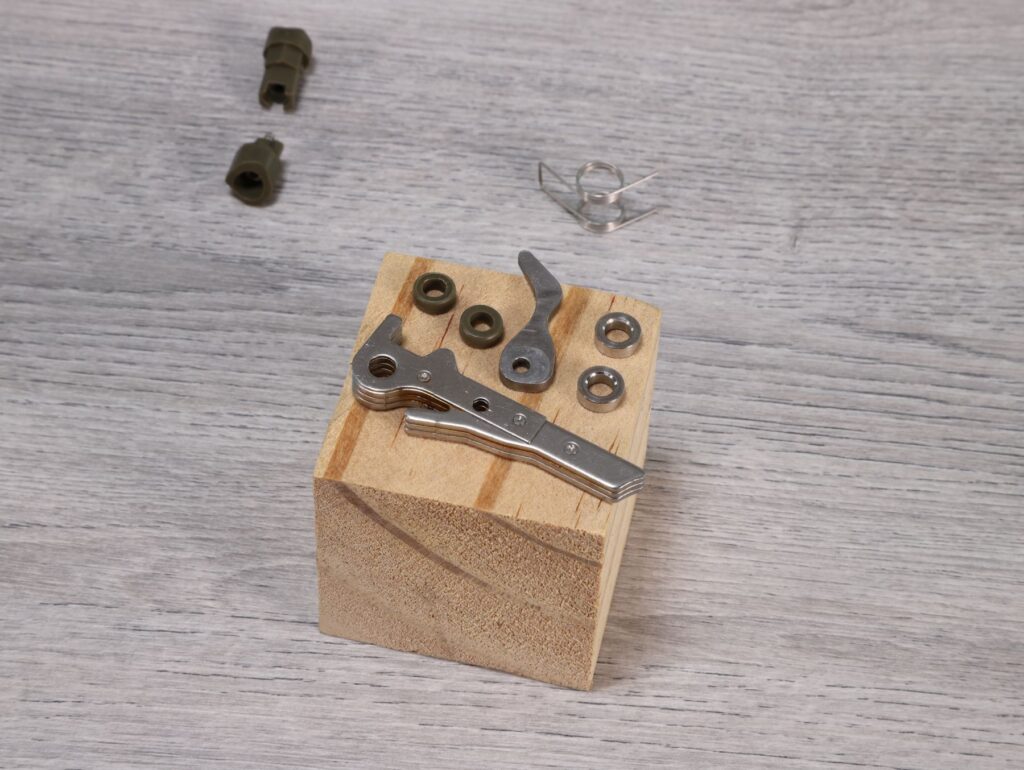
The curved stainless-steel lateral line-release lever retains the monofilament effectively. It can be installed on either side of the mechanism by removing a Phillips-head screw.
Aluminium barrel
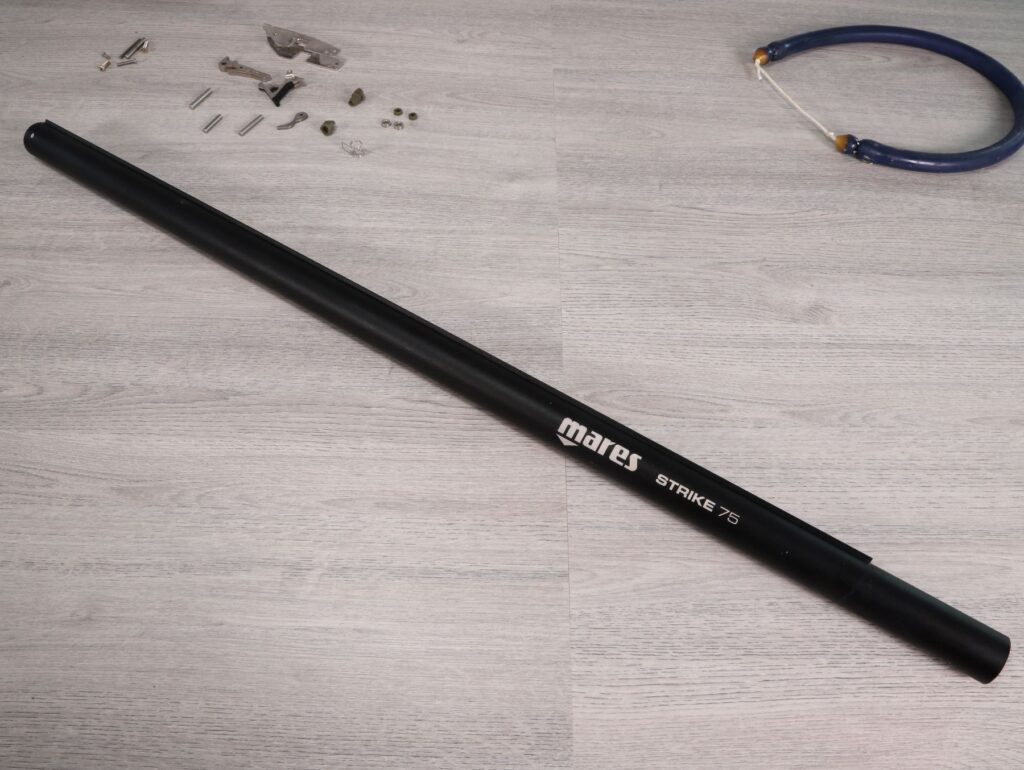
The Mares Strike has a 28 mm aeronautical-grade aluminium barrel with 1 mm-thick walls and an integrated shaft guide.
This is a conventional configuration for a quality aluminium speargun: sufficiently rigid for the intended loads without adding excessive weight. The integrated shaft guide helps position the shaft during loading and contributes to barrel stiffness and shooting accuracy.
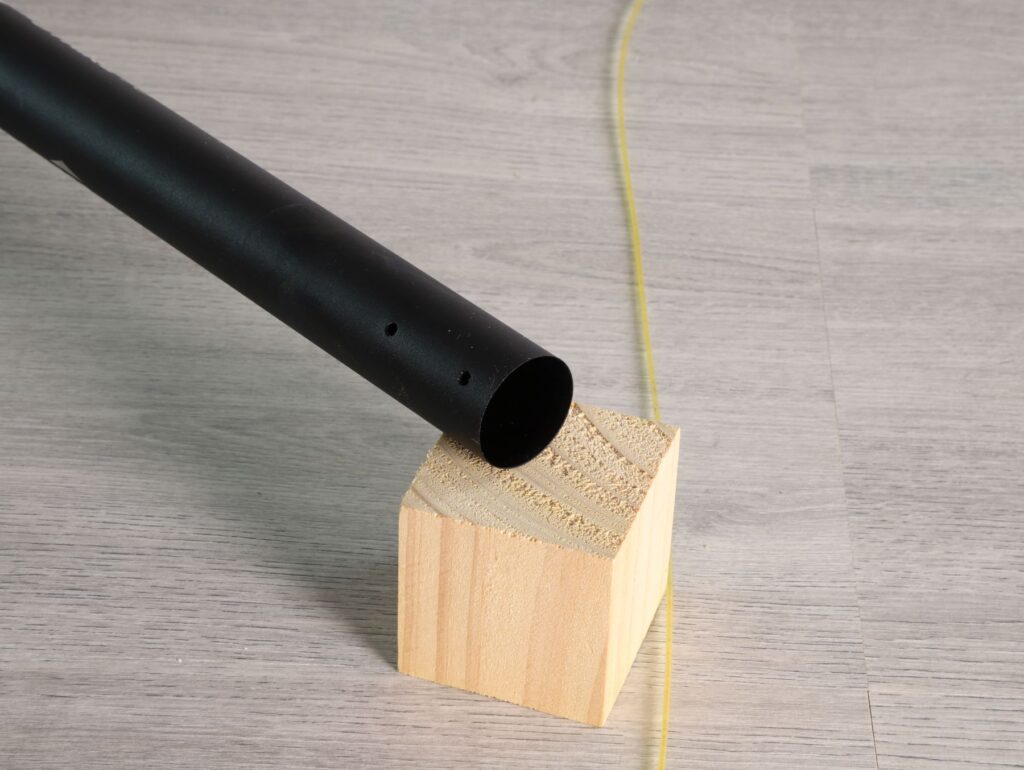
The barrel is anodised along its entire length, including its ends. These have a flared internal profile that facilitates the insertion of the handle and muzzle while reducing the risk of damaging the O-rings.
Muzzle
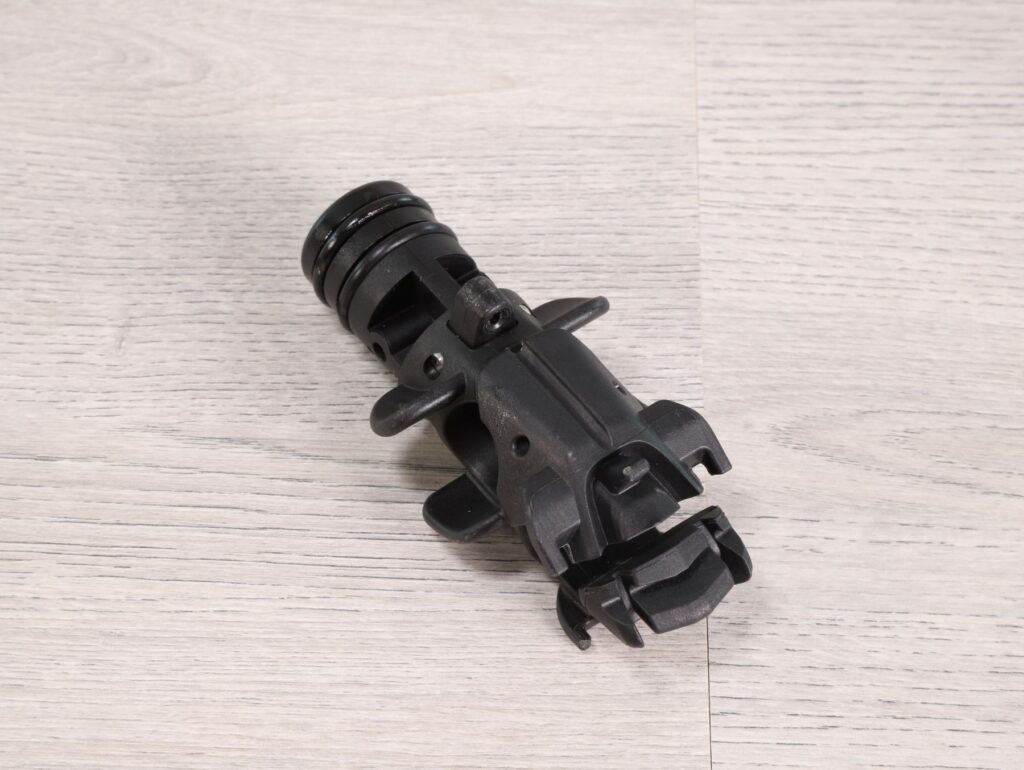
The glass-loaded nylon muzzle can accommodate one or two circular bands with diameters from 14 to 18 mm.
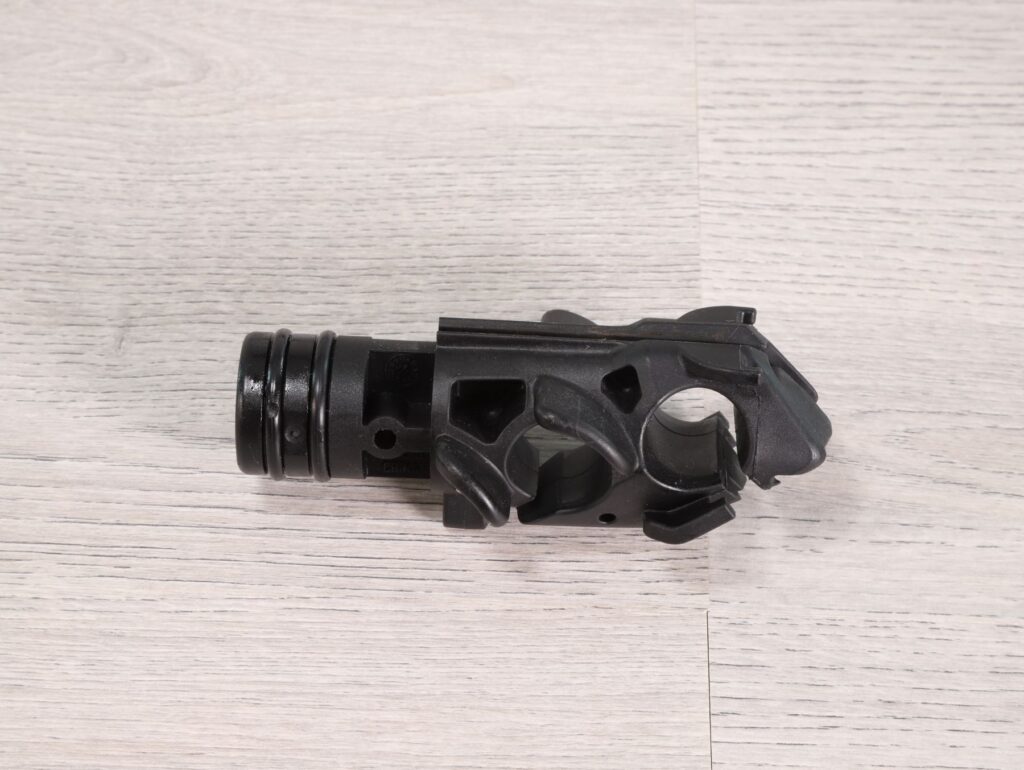
Its large curved wings lift and guide the bands, keeping them aligned with the shaft, for a more efficient and precise shot. They also limit unwanted band vibration while swinging the speargun.
Two long front horns retain the monofilament, including in rough water or current. The upper part of the muzzle continues the integrated shaft guide of the barrel.
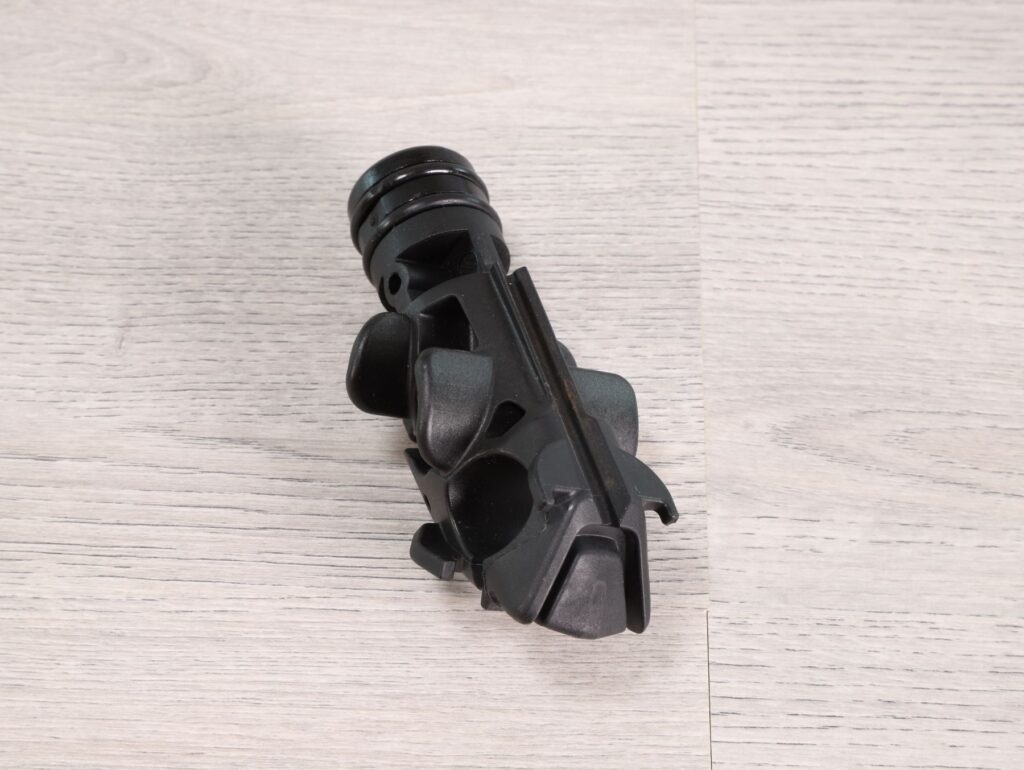
The design is functional but slightly larger than simpler open muzzles. Nevertheless, its weight is limited to 60.7 grams.
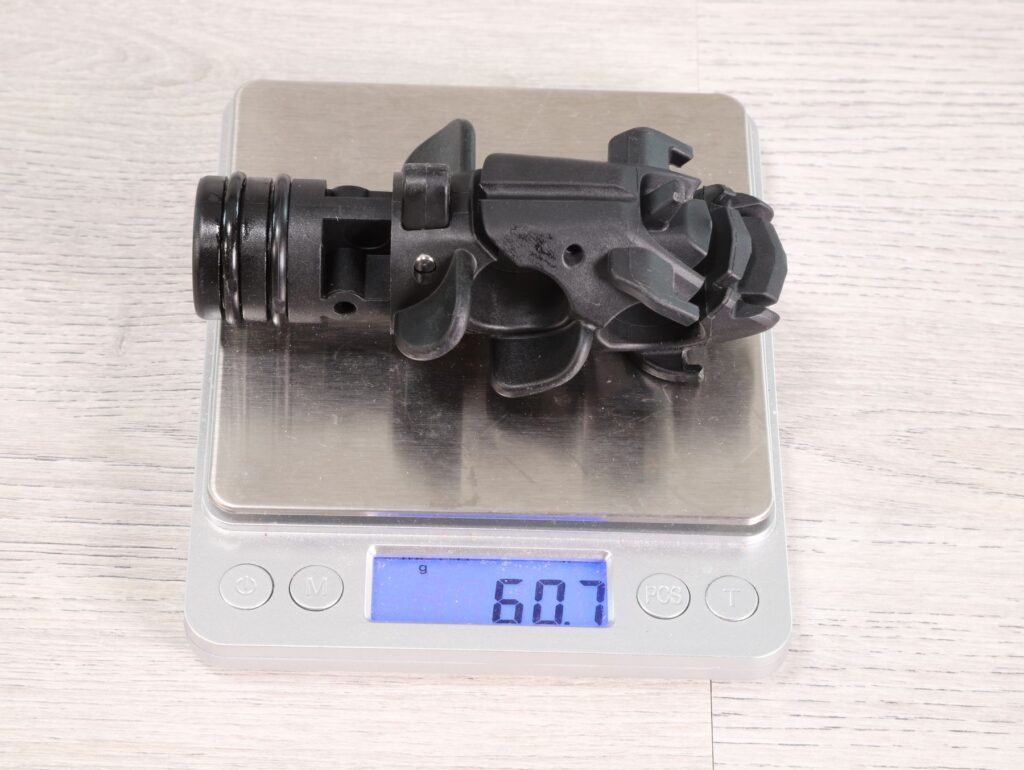
The muzzle connects to the barrel through a male-and-female coupling fitted with two O-rings and secured by a single screw.
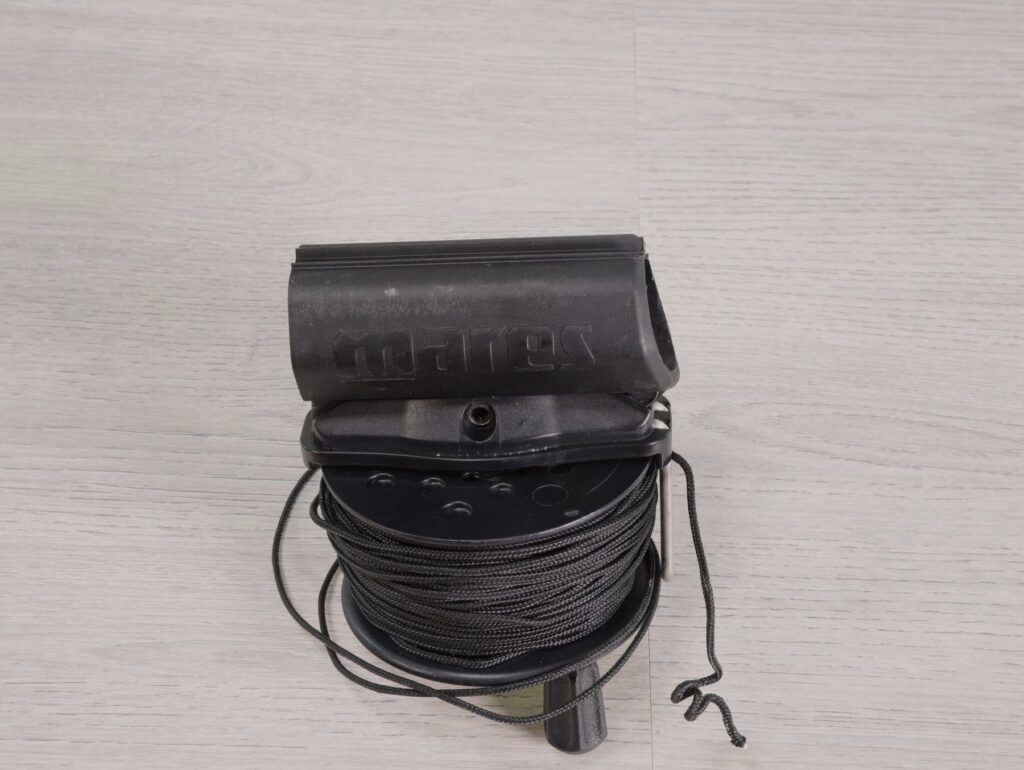
Mares Hunter reel
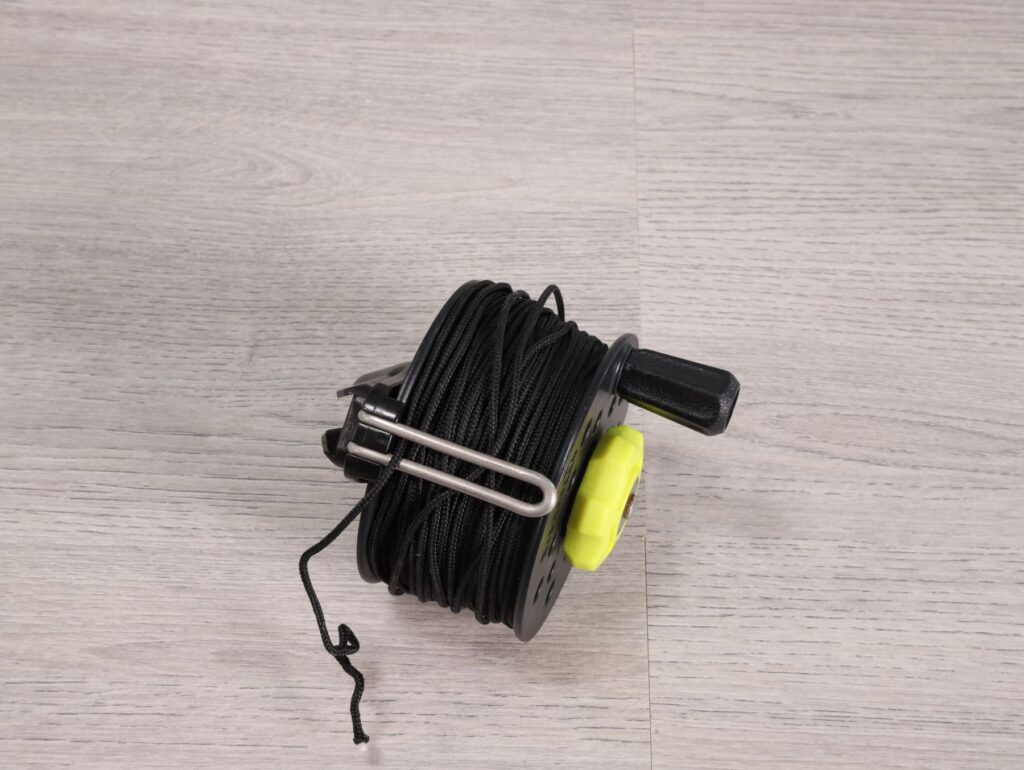
The Mares Hunter reel has a glass-filled nylon drum and a stainless-steel frame. The drum is rigid enough to limit deformation under load.
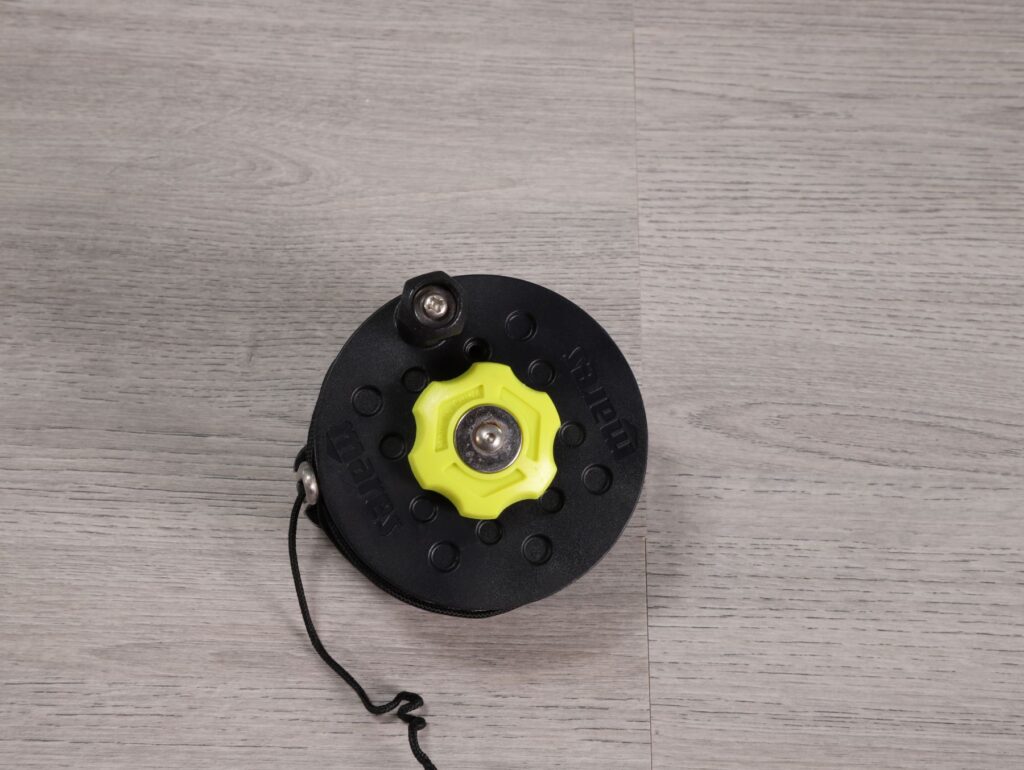
Its micrometric drag is adjusted using the yellow knob underneath the reel. The knob is generously sized and has a serrated surface, although a more pronounced texture would make adjustment easier when wearing thick gloves.
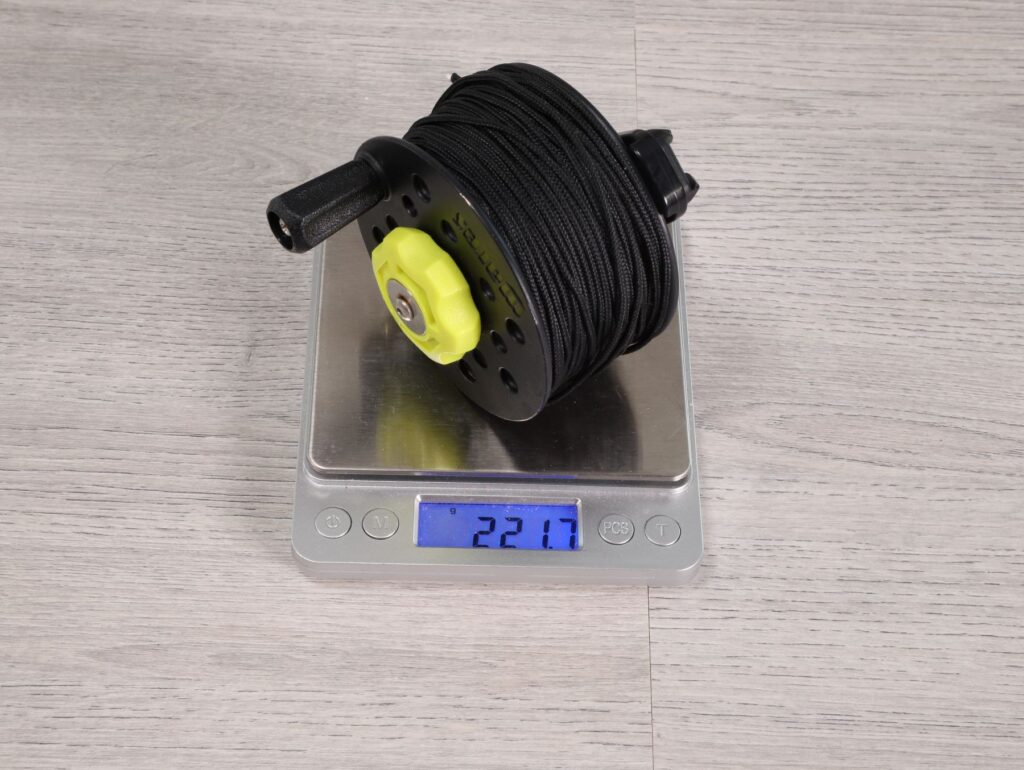
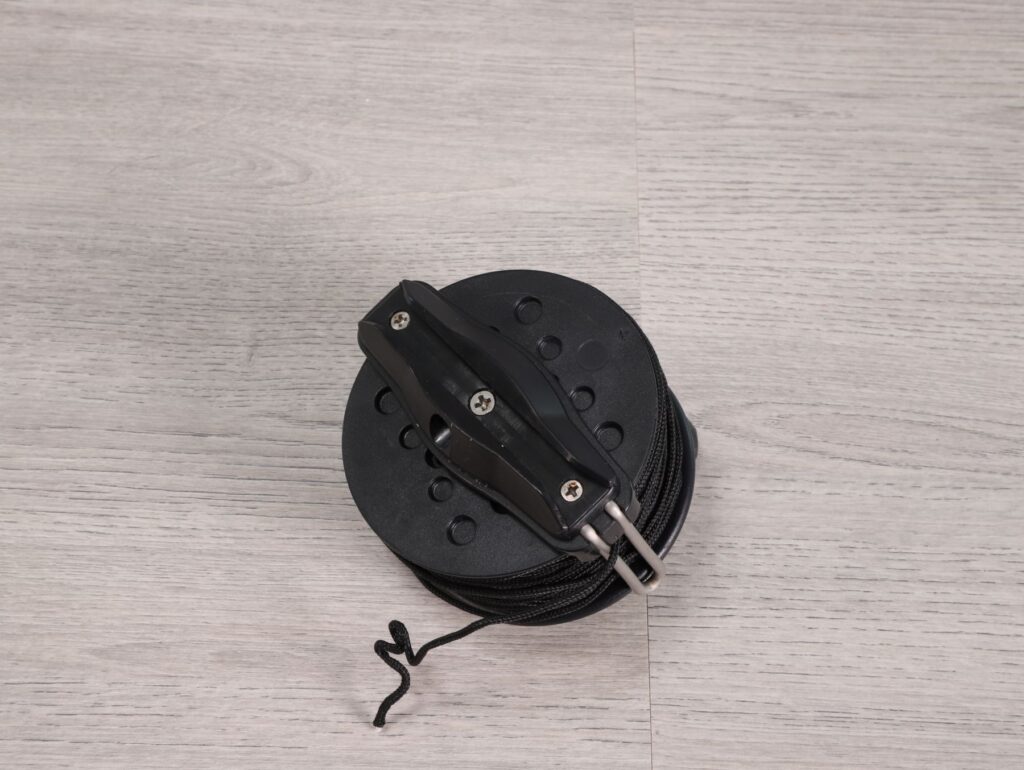
The drum can hold up to 100 metres of line. A stainless-steel line guide controls the passage of the line. With the line installed, the complete reel weighs 221.7 grams.
The reel has a very good sliding connection to and element mounted on the barrel. The connection is resiatnt and rigid to withstand high loads.
Shaft
The standard shaft is a 6.5 mm SLG shaft made from 17-4 PH stainless steel. It has three compact laser-welded shark fins, each with a through-hole for connecting the monofilament.
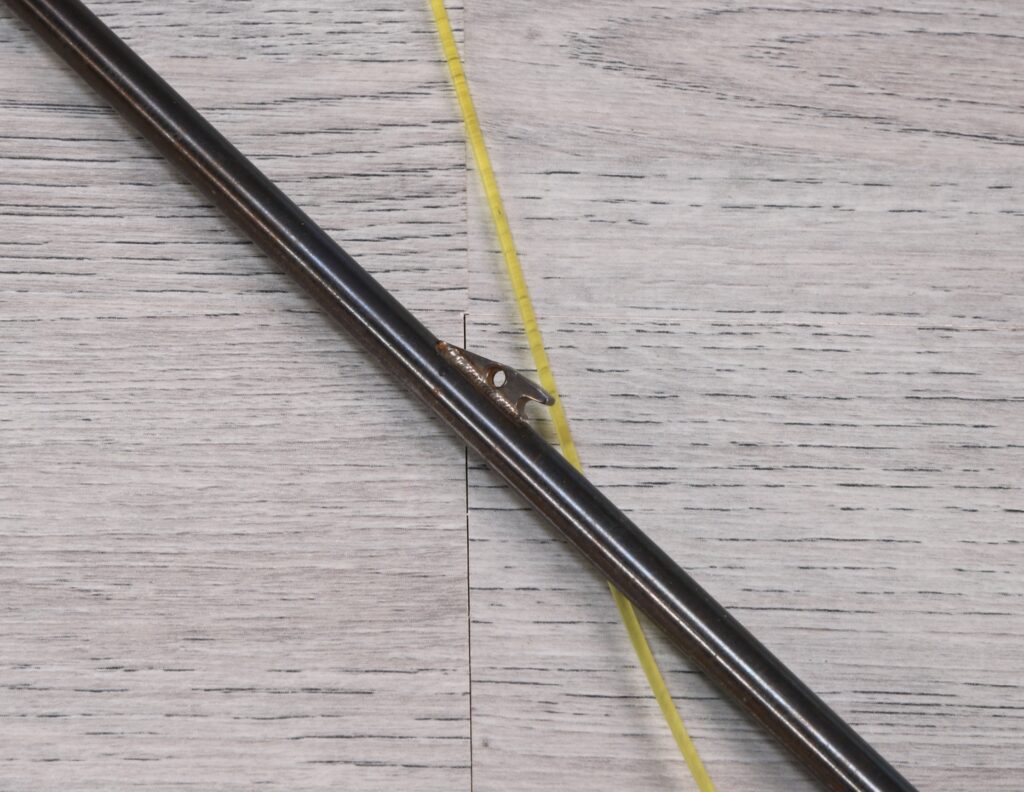
The shaft uses a single upper flopper. Its profile is machined around the flopper to reduce the overall section and improve penetration through the water and the fish.
Elastic bands
The standard configuration uses a single 17 mm Mares S-Power Indigo circular band. The muzzle also allows a twin 14 mm S-Power Indigo setup.
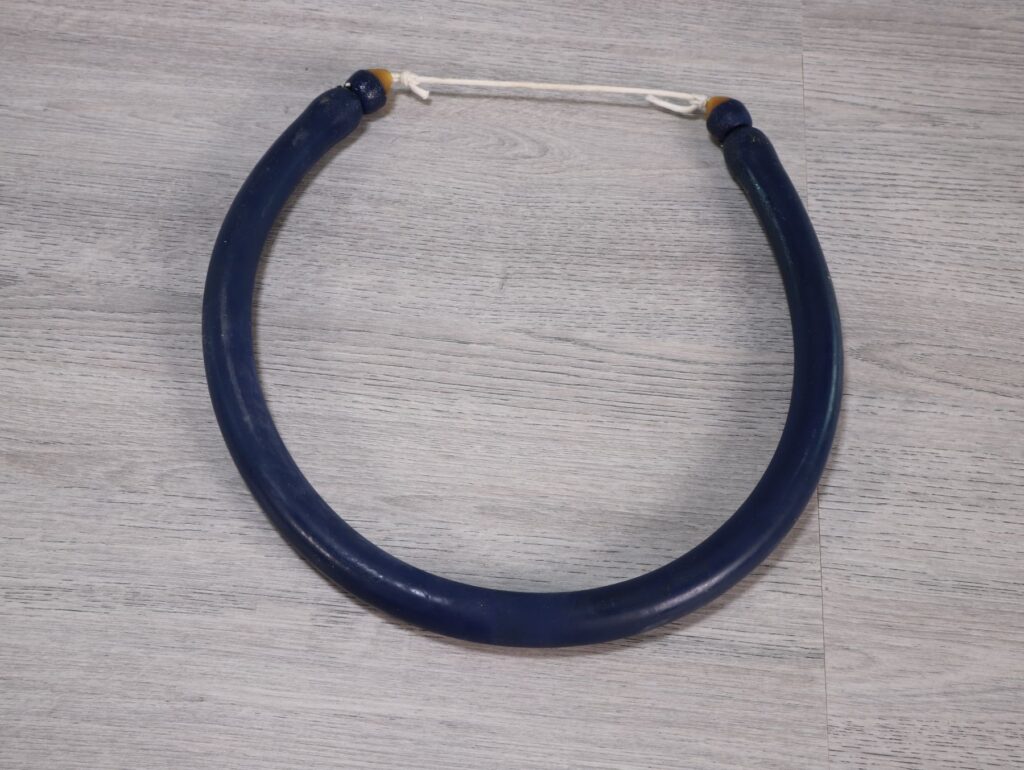
The wishbone is made from 2 mm Dyneema® line. Alternative band configurations can be selected according to the length of the speargun, the required power and the fishing technique. Some examples have been indicated by Mares Pure Passion team of athletes.
Conclusions
The disassembly (don’t disasseble the release mechanism at home, as it can be done only by autorised dealers) reveals several interesting technical solutions, particularly the triple O-ring handle connection, the roller-equipped inverted trigger mechanism and the band-guiding muzzle.
Other elements, such as the 28 mm aluminium barrel and integrated shaft guide, follow established designs commonly used on quality spearguns. The muzzle is relatively large and the reel-adjustment knob could offer better grip, but both components remain functional.
Overall, the Mares Strike combines conventional solutions with some more distinctive design details that are difficult to evaluate without completely disassembling the speargun.